After the show: surveys, results and next year
Thank everyone, write your notes, ask vendors and shoppers how it went, count your results honestly, and book next year while it's fresh.
Last checked October 27, 2026
This guide is for the days after your show: thanking everyone, writing down what happened, asking vendors and shoppers how it went, counting your results honestly, and starting next year. It comes from shows' and cities' own recaps and surveys, university extension services, emergency managers' debrief guides and the IRS, quoted below. Where something comes only from experience, it says common practice.
In short: thank everyone within a day or two, and write your notes while they're fresh. Send vendors a short survey the evening of the show, and count your results honestly. Then tell vendors how it went, and book the venue for next year before someone else does.
1. The first two days
- Say thank you. At our own shows, it's an email to vendors and a post on Facebook. Thank vendors, volunteers, shoppers, the venue and your sponsors by name. Willowbrook High School's craft fair in Illinois thanked "all of the volunteers, shoppers, vendors and Willowbrook administrators/staff members."
- Give one number people will remember. The same recap: "more than 1,400 attendees, as well as 185 vendors, crafters and food trucks," and "Nearly $18,800 was raised" for scholarships. Neenah High School's craft fair in Wisconsin "raised $16,893.76 that was distributed in the community."
- Ask for photos and feedback in the same post. San Mateo's Highlands Recreation District asked: "If you have any feedback or photos from the event that you would like to share, please send them to…"
- Tie up the loose ends: refunds you promised, the lost and found, anything you borrowed, and the cash in the bank, counted by two people.
2. Write your notes while they're fresh
- At our own shows, we write notes all through the show on our phone: what went well, problems, messes left behind, and ideas for next year.
- Hold a short debrief within a few days, with your volunteers and, if you can, the venue's contact. "Schedule meeting a few days after event but do not delay" (the Federal Highway Administration). Ohio's guide for schools says within three business days, and that it "is not a forum to blame individuals for mistakes."
- Ask four things: what was meant to happen, what did happen, what went well, and what to change. FEMA's form asks for the "top three (3) organizational strengths" and the "top three (3) items requiring improvement."
- Write one page: your numbers, the three things that worked, the three to fix (each with who will fix it and by when), and next year's date. New York's planners: "Ensure that plan will be used for future events and is not just a formality. Assign owners, timelines, and tracking mechanisms." Keep it where you'll find it when you start planning next year.
On My Vendor Show: write notes on your phone during the show in My Notes: what to change, a vendor to remember, how the venue worked. Next-time notes show up on your next show until you tick them off.
Sign up freeFrom real vendor shows
3. Ask your vendors
- Send a survey the evening of the show, or the next morning. Vermont's farmers markets found that if the message "doesn't go out until the day after market, the entries from vendors tend to be lower." Send one reminder about a week later (University of Wisconsin-Extension).
- Keep it short: about 5 to 10 questions, a few minutes, with comments last. "Keep it short. Be concise and avoid unnecessary questions" (Mississippi State University Extension).
- Expect about a quarter to half of vendors to answer. The University of Minnesota's survey of farmers market vendors heard from 24.8%, and Ramsey, Minnesota's business expo from 58% of its 33 vendors. A survey sent months later gets a handful: one Indiana market's winter survey brought back 9.
- Anonymous or not: the USDA's own market keeps its vendor survey anonymous, which brings franker answers; asking for names lets you follow up. Your call.
- Example survey:
- How was our communication before the show? (1 to 5)
- How did load-in and setup go? (1 to 5)
- Was your booth's location what you expected?
- How was the crowd?
- Your sales, compared with what you expected: better, about the same, or worse?
- Was the booth fee fair for what you got?
- Would you come back next year? Yes, maybe or no.
- One thing we should change.
- Anything else?
- Tell them what you heard. "Offer to send a brief summary of the results, so they know their information will be used" (University of Wisconsin-Extension).
On My Vendor Show: write your vendor survey on My Surveys from ready-made questions or your own, then send it to the vendors you pick, one email each, with a reminder a week later.
Sign up free4. Ask your shoppers
- A dot survey at the show: a few questions on poster boards, and shoppers answer with stickers. Oregon State University Extension's advice: "consumers are willing to answer four questions," don't call it a survey, and have someone at the board, since "unsupervised, 'self-serve' dot posters will yield few responses." Put it near the exit. Penn State Extension adds a QR code on the poster for people who'd rather answer on their phone.
- Good questions: how they heard about the show, their ZIP code, about how much they spent, and one thing they'd change.
- Read the comments on your Facebook posts and event too (common practice).
5. Your numbers
- At our own shows, we track all of it: shoppers, sales, booths and money.
- Shoppers: count 20 minutes each hour and multiply by 3 (Show day has how). Report it honestly, as a count for that day, with the weather. Bloomington, Indiana's holiday market did just that: "Our estimated attendance was 6,942," against 6,741 the year before and 7,005 the year before that, each with its temperatures. Washington's legislature tells events to say whether a number is a "Direct Count," like "clicker counts at entry points," or an estimate. A Mississippi State Extension specialist: "Any of that's going to be an estimate unless you sell a ticket."
- Booths: how many you sold out of how many you had, plus cancellations, no-shows, and new and returning vendors. Ramsey's expo: "57 registered vendors in attendance (Full - 60 booths)."
- Vendors' sales: ask anonymously, as a range or as better, the same or worse than expected. "Many markets have found that using anonymous sales slips allows them access to vendor sales data" (the Farmers Market Coalition).
- Money: what came in and what went out, against your budget, line by line. Ramsey's summary lists "Event revenues $8,830.00… Event expenses $9,851.10," and explains each cost that ran over.
- Shoppers per vendor: there's no right number ("The perfect ratio of vendors to consumers... does not exist," says Purdue Extension), but compare yours from year to year.
On My Vendor Show: each show's Stats tab has visits to its page by where they came from, booths filled, and the money in and still owed. Financials for your books lists the year's payments and refunds across your shows, with a CSV for your bookkeeper.
Sign up free6. Tell vendors how it went
- At our own shows, we haven't usually sent a recap, but it's worth doing. Vermont's market metrics guide: "Periodically reporting back to vendors how the market is performing overall can also help motivate them."
- Keep it short: the shopper count (honestly, for that day), what vendors said in the survey, what's changing next year, and next year's date.
- Never round up. If the crowd was small, say so, and say what you'll do about it. Inflated numbers come back to you when vendors compare notes.
7. Next year
- Book the venue before you leave, or that week. At our own shows, we book the next one right after. Venues often give last year's events the first chance at the same dates: "priority for event dates shall be given to events held in previous calendar year (provided all contractual obligations were successfully fulfilled)," says the Illinois State Fairgrounds' rule, and Tavares, Florida gives annual events "first priority for the same time and location." But nothing is held until it's signed: "An event is not guaranteed until a signed contract and down payment are received" (Brown County, Wisconsin). A Nashville pet expo lost the fairgrounds dates it had used for years because it had no signed contract.
- Returning vendors: at our own shows, anyone may apply again, and we decline those we won't have back. Other shows give returning vendors a deadline to keep their space, like the Carolina Christmas Bazaar (before June 1) and Warwick Applefest (June 15); juried shows judge everyone again: "No one is grandfathered into the show" (the Smithsonian Craft Show).
- Vendors you won't have back: note why in your records, so the decision is the same next year. Vendor rules, refunds and bad weather has strikes.
- Prices: decide early, and put them on the new application. Cape May, New Jersey's craft show raises its fee for late applications, from $175 to $205. Give vendors notice of a price rise (San Francisco gave its farmers market vendors 60 days, after vendors complained they hadn't been told). How much to charge for a booth has how much.
On My Vendor Show: My Vendors keeps everyone who's applied to your shows. Mark the ones you won't have back as deleted, and their next application says so. Notify vendors tells the rest when next year's show goes live, and leaves out anyone archived or deleted.
Sign up freeFrom real vendor shows
8. Keep your records
Ask a tax professional how long to keep yours. What follows is only what the IRS says in general.
- The IRS's general rule: "Keep records for 3 years" from filing, longer in some cases: 6 years if you leave out income worth more than a quarter of what you reported, 7 years for a bad debt deduction, and employment tax records "for at least 4 years."
- Some states set their own for show hosts' vendor records, like four years in Texas, Ohio and California. Insurance, permits and sales tax lists every state's rules.
- Keep: the vendor list and applications, payments and refunds, your budget and receipts, the survey answers, and your notes.
Mistakes to avoid
- Sending the survey weeks later, or making it long.
- Rounding up the crowd, or quoting a number you didn't count.
- Leaving without next year's venue booked, or without a signed contract.
- Notes you never open again.
- A thank-you that forgets the volunteers or the sponsors.
Free printable: post-show review
Fill it in within a few days of the show, and keep it where you'll find it when you plan next year. We'll email you the link, to print or save as a PDF.
Where these numbers come from
Numbers marked as common practice come from many shows' published rules and prices, not from one source. The rest come from these pages:
- Willowbrook High School, Illinois: craft fair recap (2025)
- Neenah High School, Wisconsin: Helping Hands Craft Fair (2025)
- Highlands Recreation District, California: spring craft fair recap
- New York State DHSES: mass gathering planning guide (2026)
- Ohio School Safety Center: hotwash guide (2023)
- Federal Highway Administration: post-event debriefing meeting
- FEMA: hot wash form
- City of Bellevue, Washington: special event post-event evaluation (2024)
- NOFA-Vermont: farmers market metrics toolkit (2020)
- University of Wisconsin-Extension: getting a respectable response rate
- Mississippi State University Extension: P3767, customer surveys (2025)
- University of Minnesota FM360: vendor survey summary (2024)
- City of Ramsey, Minnesota: business expo summary (2026)
- City of Bloomington, Indiana: farmers market advisory council minutes (Jan 2026)
- Federal Register: USDA Farmers Market information collection (2020)
- City of LaFayette, Georgia: Honeybee Festival vendor survey
- Oregon State University Extension: tools for rapid market assessments
- Penn State Extension: Pennsylvania farmers market assessment survey (2023)
- Washington State JLARC: overall attendance definitions
- The Commercial Dispatch, Mississippi: how crowd sizes are determined (2025)
- Farmers Market Coalition: evaluation tips
- Purdue Extension: EC-739, farmers markets
- Illinois Administrative Code 8-270.510: state fairgrounds scheduling
- City of Tavares, Florida: special event permits
- Brown County, Wisconsin: fairgrounds commercial events
- NewsChannel 5 Nashville: exotic pet expo bumped from the fairgrounds
- Carolina Christmas Bazaar, North Carolina: vendor letter (2026)
- Warwick Applefest, New York: craft vendors (2026)
- Smithsonian Craft Show: call for artists (2026)
- City of Brea, California: spring craft boutique (2026)
- City of Cape May, New Jersey: Crafts at Christmas application (2025)
- Mission Local: San Francisco raises Alemany farmers market stall fees (2025)
- IRS: how long should I keep records?
Last checked October 27, 2026. This isn't legal or tax advice; rules differ by state and city.
From real vendor shows
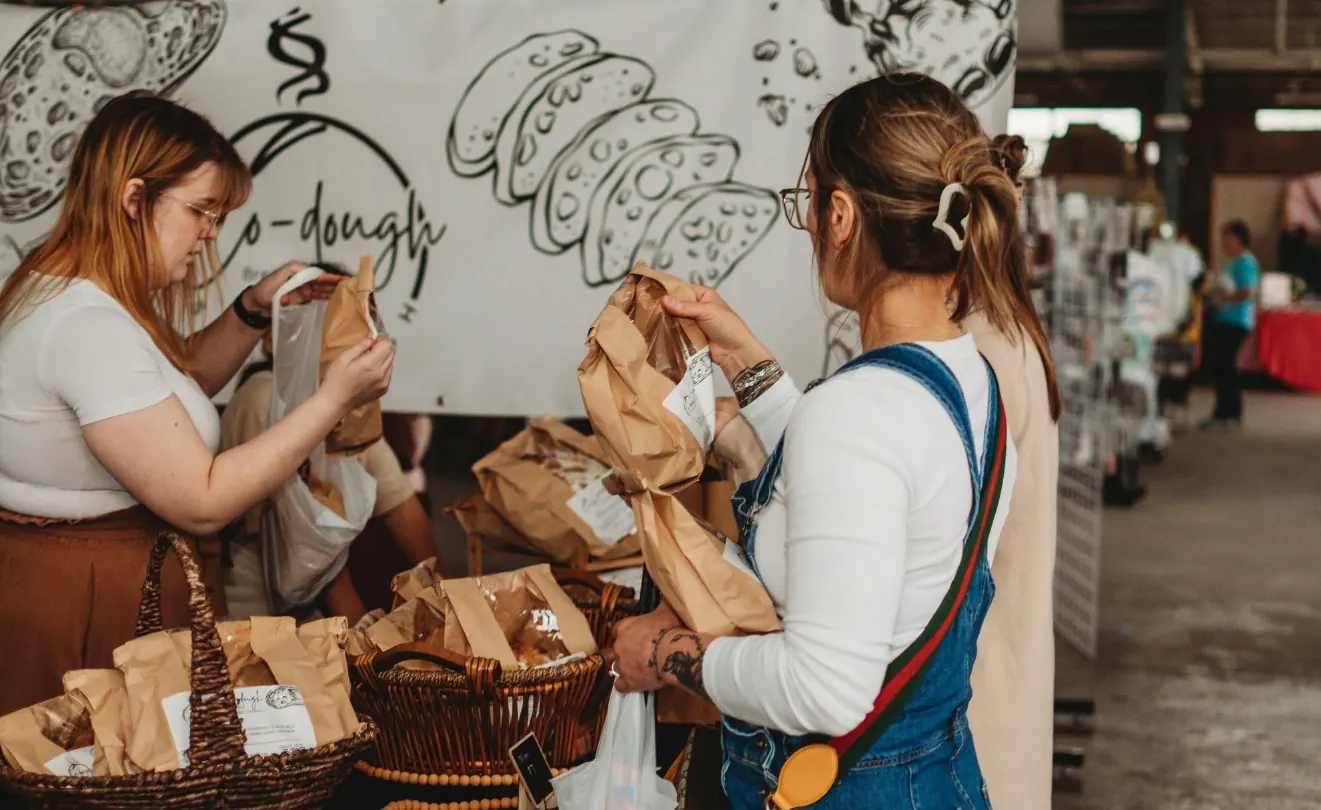
A baker bagging an order 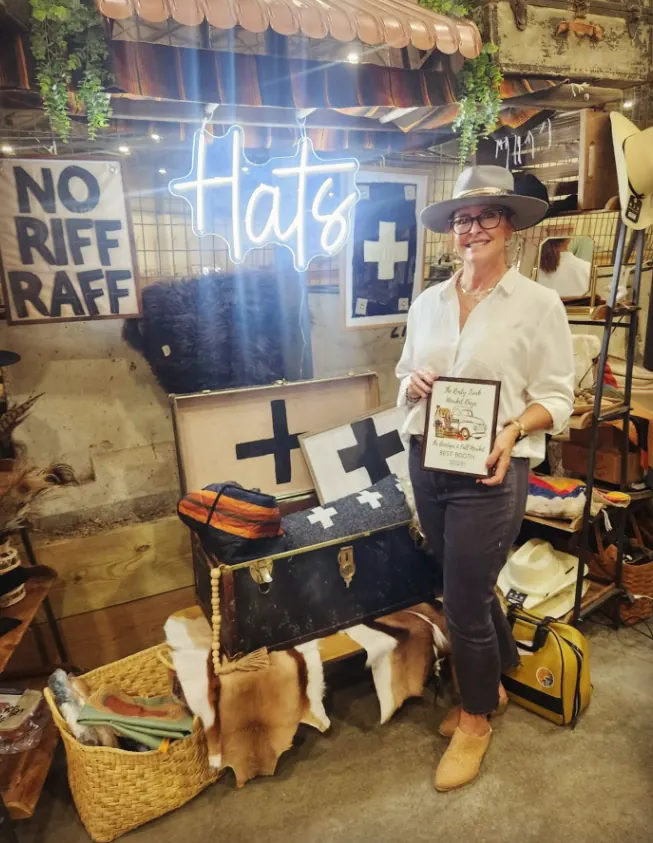
A vendor showing a framed print 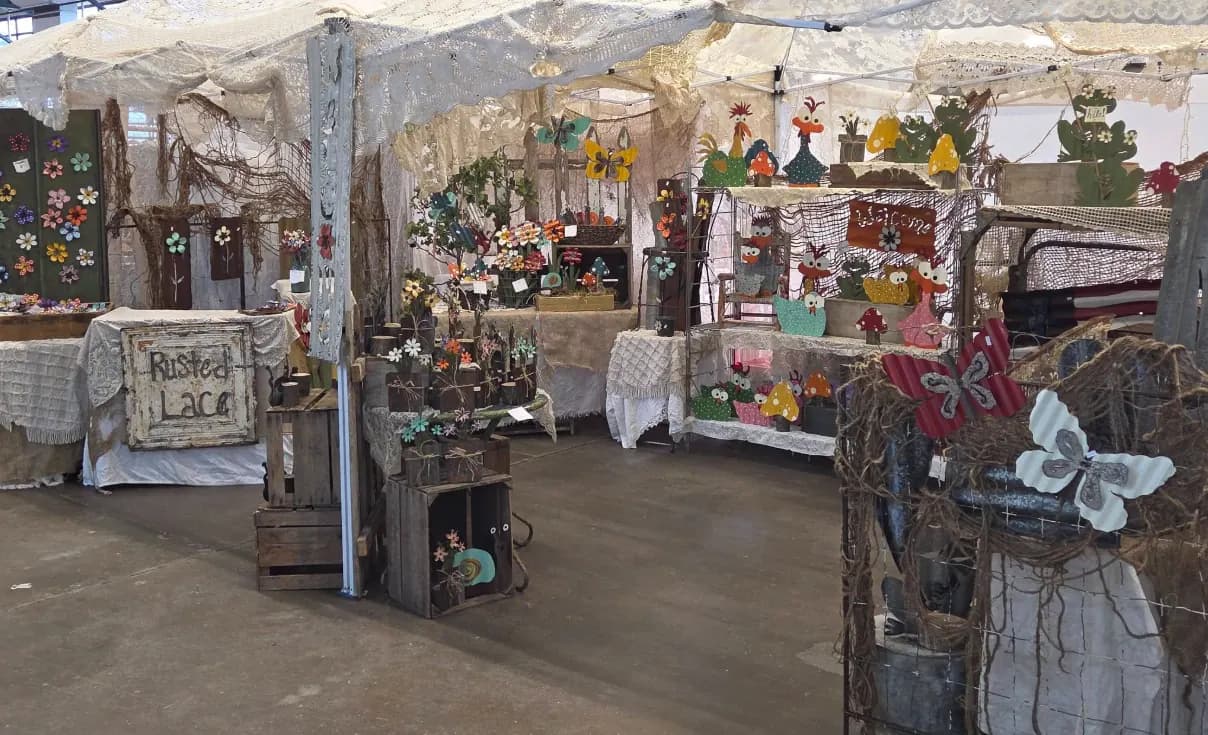
A booth of rustic decor 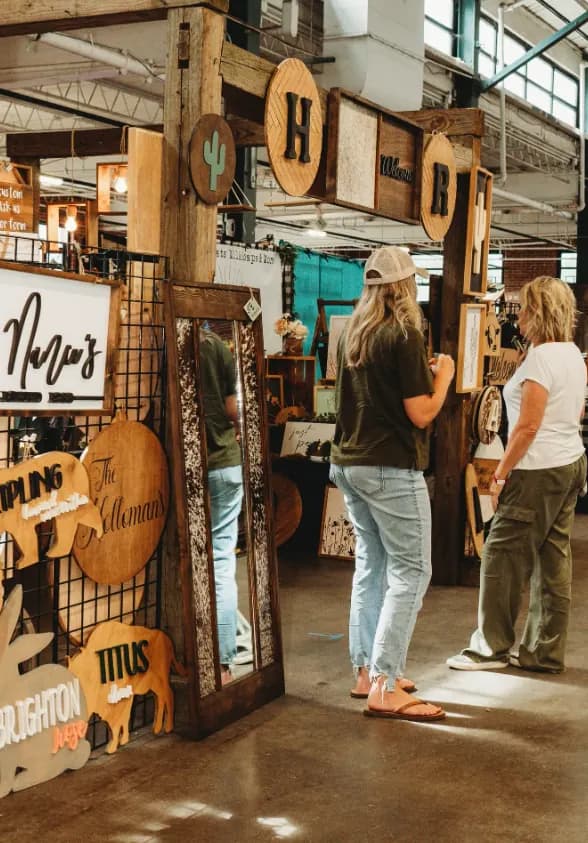
Shoppers at a booth of wooden signs 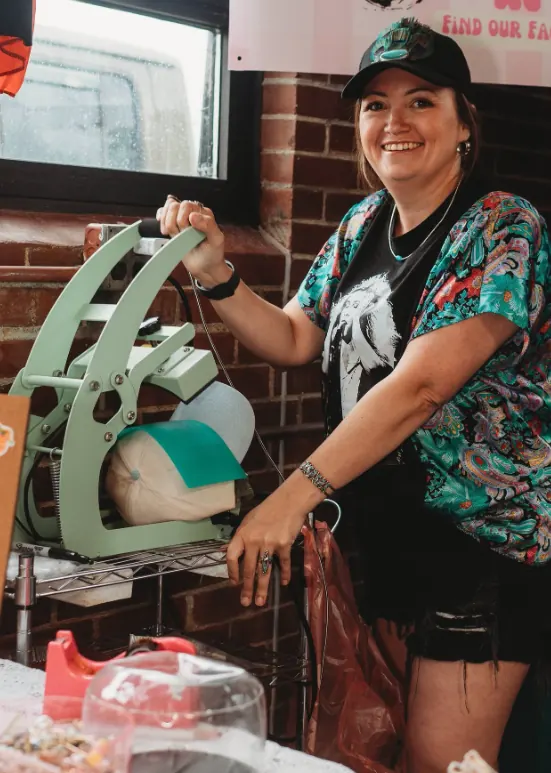
A vendor at work in her booth 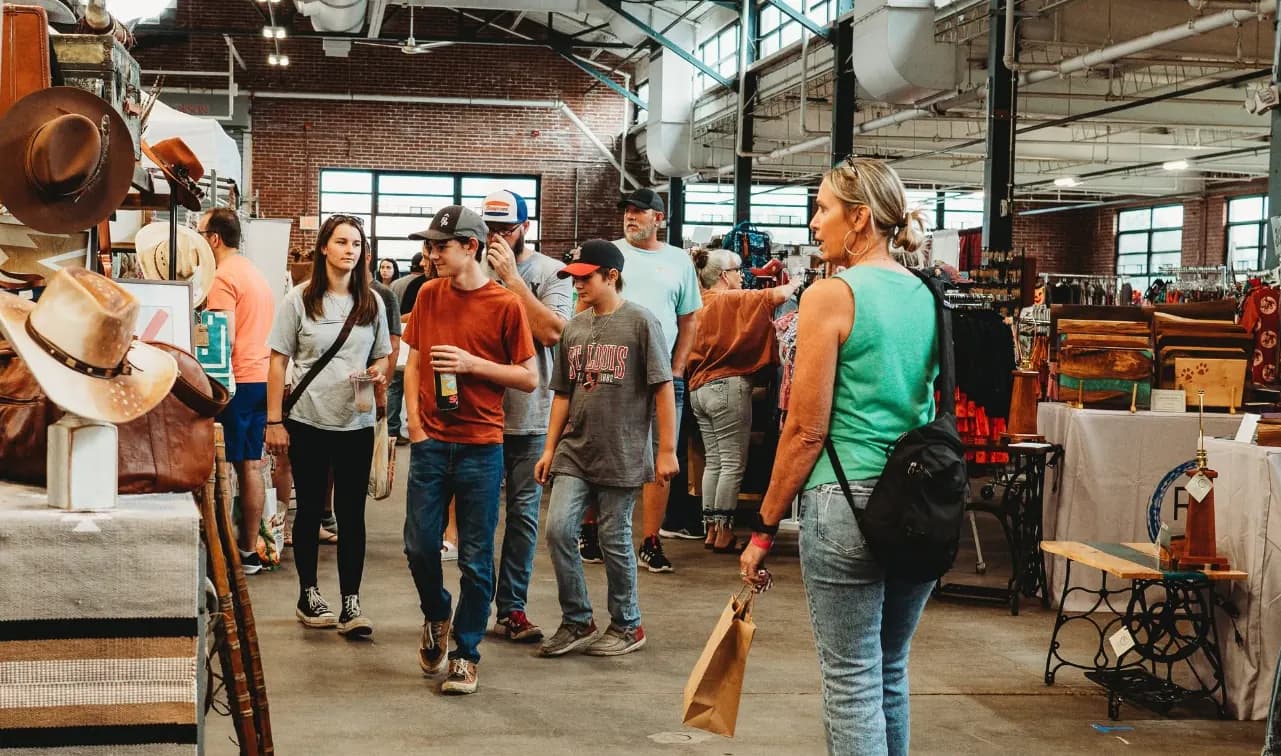
Shoppers walking an aisle

Ready to host your show?
My Vendor Show takes your vendor applications, collects booth fees by card, and lays out your booth map, with every email to vendors written for you.
Free for hosts. Vendors who pay online pay a small booking fee: 3%, never more than $5 a booth, unless you choose to cover it. Square takes its usual card fee.
Sign up free