Vendor rules, refunds and bad weather
Rules vendors agree to when they apply: refunds when they cancel or you do, no-shows, leaving early and bad weather, with a sample vendor agreement.
Last checked October 27, 2026
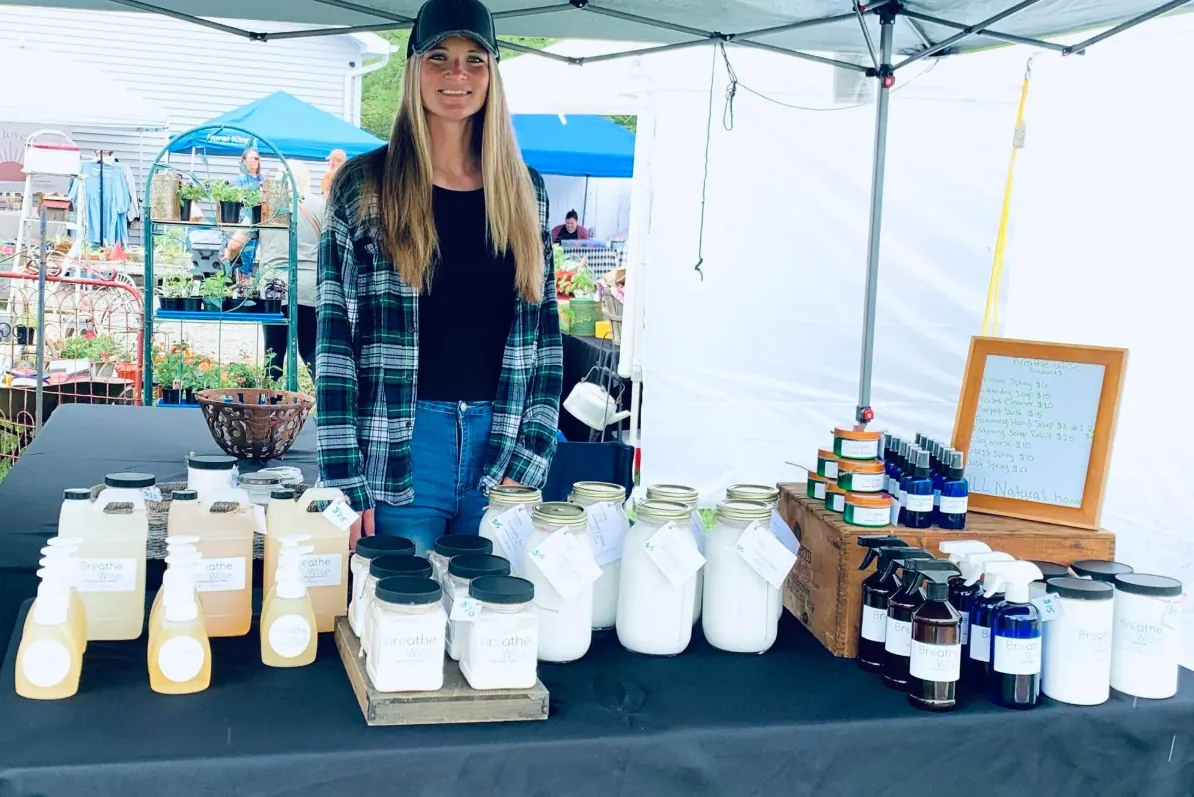
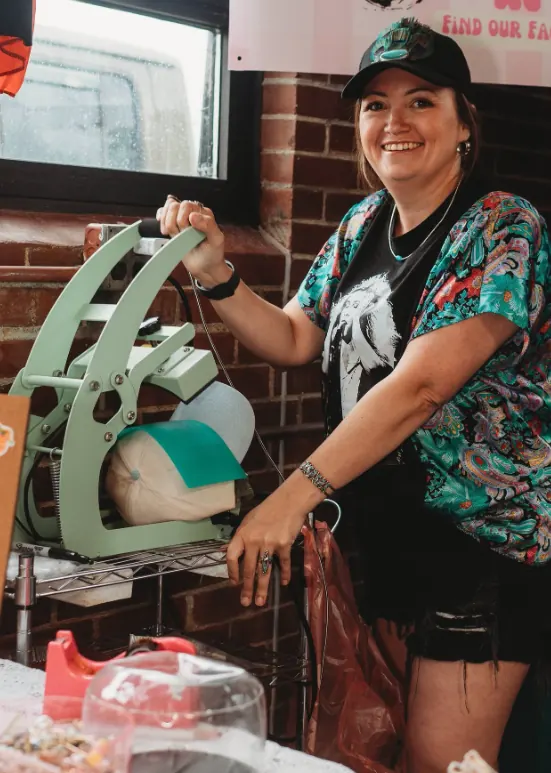
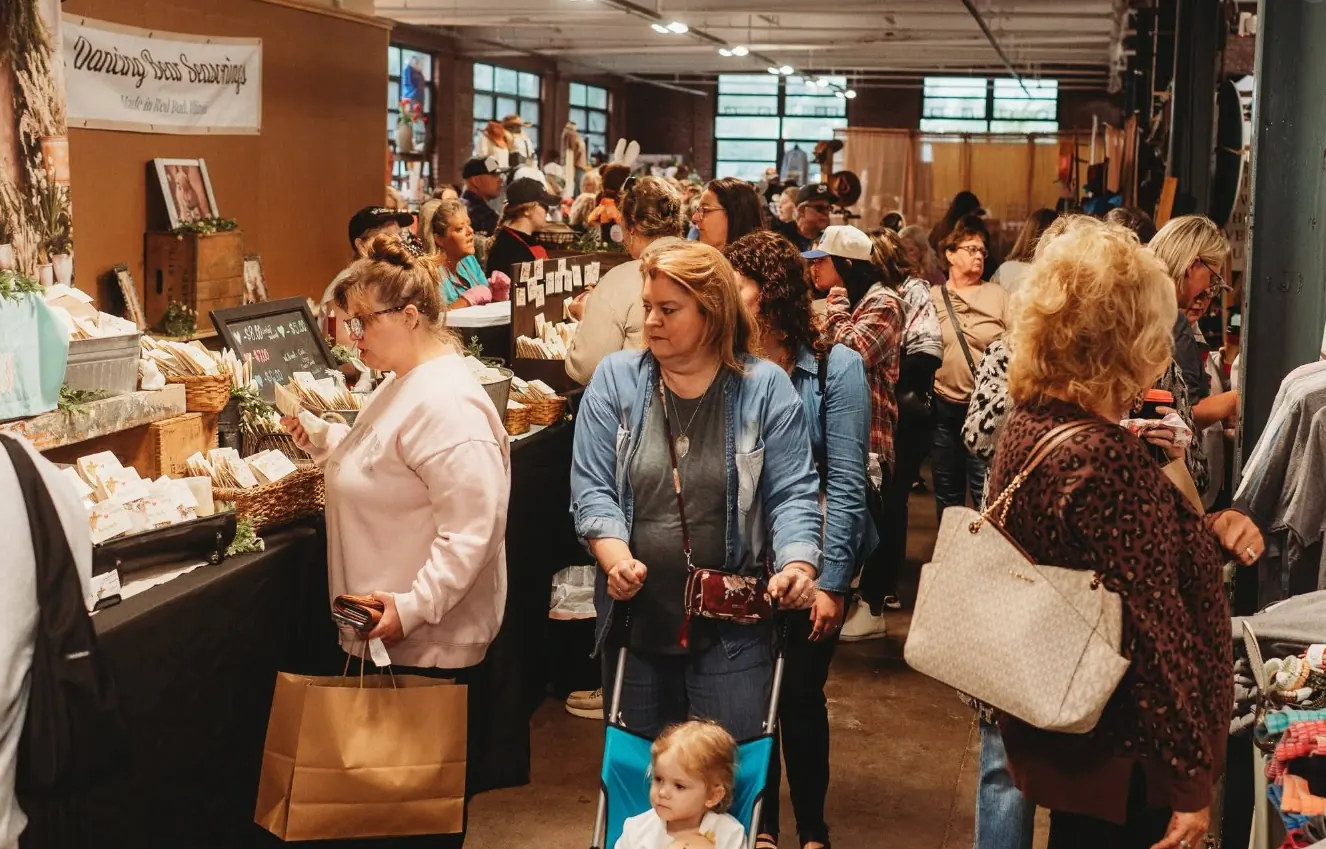
This guide is for the rules vendors agree to when they apply: refunds when they cancel or you do, booths that can't be handed on, no-shows, leaving early and bad weather. It comes from the rules 48 shows and markets published for their own vendors for 2025 and 2026, and from the National Weather Service, fire departments and insurance regulators, quoted below. Where something comes only from experience, it says common practice. A sample vendor agreement to copy and change is at the end.
In short: write your rules before applications open, and have vendors agree when they apply. Say plainly what happens if they cancel and if you do, set a check-in time, and decide now who calls off a show for weather, by when, and what vendors get.
1. Write your rules before applications open
- Vendors should read your rules before they pay, and agree to them when they apply, with a box to tick or a signature. A rule added after vendors have paid is hard to enforce, and it feels unfair (common practice).
- Keep it to a page or two, in plain words. Most shows' rules are short lines, not a contract.
- Say what happens when a rule is broken. "Early teardown will result in permanent removal from future participation," says the fall festival at South Elkhorn Christian Church in Lexington, Kentucky. A rule with no consequence is only a suggestion.
- Keep what each vendor agreed to, with the date, so there's no argument later about which rules they saw.
On My Vendor Show: the application form's last question carries your vendor agreement, up to 8,000 characters. Vendors read it above "I agree to the show's rules and refund policy", it's on your show's page too, and each vendor's answer stays with their application.
Sign up free
2. What your agreement covers
Shows' rules cover much the same ground. Use this list to check yours, and the sample at the end to start from.
- The show: dates, setup times, opening and closing, and teardown.
- The booth: its size, what you provide (tables, chairs, power), and that cords are taped down and never cross an aisle. "Extension cords may NOT cross walkways" (Adams County Museum, Colorado).
- Money: the fee, when it's due, and refunds (steps 3 and 5).
- What they sell: only what's on their application. "Sale or exhibit of items or services not listed on the application form will not be allowed. Booths will be monitored" (Stamford Downtown's arts and crafts show, Connecticut).
- Check-in, no-shows and staying until close (steps 6 and 7).
- Placement: you place the booths, and may move one for safety. Where to put each vendor has the rest.
- Weather (steps 8 and 9).
- Courtesy:
- selling stays inside the booth: "Aisle solicitation is not allowed" (Minocqua, Wisconsin);
- music stays in the booth: "not audible more than 8ft from the perimeter of the booth" (the Black Hills Home Show, South Dakota);
- no smoking, and no pets except service animals (Mistletoe Market, Virginia).
- Generators: shows split. Five of those we read ban them, and five allow only quiet ones, like Jupiter, Florida's art festival: "must not exceed 65 dB at 5 feet."
- Cleanup and vehicles: leave the space as you found it, and unload and move the car before setting up.
- Insurance, permits and sales tax: each vendor's own. Four of the shows we read require insurance, and most others recommend it. Vendor applications and choosing vendors covers checking a certificate.
- Holding you harmless: 19 of the 48 shows say the vendor won't hold the show responsible for loss, theft or injury at their booth. Lockport VFW Post 5788 in Illinois: "you agree to release and hold harmless Lockport VFW Post 5788, its representatives, and staff from any claims or liabilities related to your participation, including loss, damage, theft, or injury." Have a lawyer or your insurer check yours.
- Photos: that you may photograph booths to promote the show. The Abington Art Center in Pennsylvania lets vendors say no: "If you prefer not to consent, please let us know."
3. Refunds when a vendor cancels
This one is your call, and shows split. Of the 43 shows we read that publish a policy:
- No refunds once accepted: 16. "An application is a commitment to show. There will be no refunds given after acceptance" (the Moravian Historical Society's arts and crafts festival, Pennsylvania).
- A full refund until one date, then none: 18, most often about 30 days before the show. The Adams County Museum wants cancellations "30 DAYS BEFORE THE SHOW IN WRITING", and the Art League of Baytown, Texas, refunds "up to 2 weeks prior to the market."
- Less as the show gets closer: 6. Edmonds-Woodway High School's music boosters in Washington refund in full 14 or more days out (less $5), half at 7 to 13 days, and nothing inside 7.
- Only if you fill the space: 2. Alton, New Hampshire refunds "only if your space can be filled by us with another vendor."
- A credit instead of cash: 1. The Villages in Florida gives a show credit, good for a year, for cancellations at least 45 days ahead.
If you want a middle path, How to host your first vendor show suggests a full refund 60 or more days out, half at 30 to 60 days, and none inside 30.
Whatever you choose:
- Ask for cancellations in writing, by email. Of the 13 shows that say how, 11 want it in writing.
- A small fee kept on refunds is common: 7 shows keep $10 to $30. Mattoon, Illinois charges a "$30.00 cancellation fee."
- Application and jury fees aren't refunded, at any of the 7 shows that charge one. The Takoma Park Folk Festival in Maryland keeps its $25 jury fee but refunds the booth fee.
- Write it down once, and keep to it. An exception for one vendor becomes a promise to the next (common practice).
On My Vendor Show: on the show's Details tab you choose a refund policy: no refunds, a full refund until a set number of days before the show, a credit toward a future show, or your own words, with room for a line of your own, like what happens if it rains. It's on your show's page, so vendors read it before they apply.
Sign up freeFrom real vendor shows
4. A booth isn't the vendor's to hand on
All 16 shows we read that mention it forbid passing a booth on: 11 outright, and 5 unless the host approves. "Your booth space belongs to the Museum and cannot be gifted or transferred to a relative, friend, booth neighbor or anyone else. If you cannot attend you must cancel (in writing) and the Museum will work the wait list" (the Adams County Museum).
- Why: you chose that vendor for what they sell. A stranger in the booth can break your category limits, sell what you turned down, or come without insurance (common practice).
- At our own shows, a booth can't be given or sold to anyone. A vendor who can't come cancels, and the booth goes to the waitlist.
- Sharing a booth is different. Some shows allow two businesses in one booth if both apply, like the Mililani Town Association in Hawaii and the Takoma Park Folk Festival.
5. When you cancel the show
- Refund every vendor in full. "If, for any unforeseen reason, the event must be canceled by the Crafts Center, a 100% refund will be issued" (the NC State Crafts Center, North Carolina). Some shows keep the fees under "act of God" or "force majeure" wording: "Vendor will not be entitled to a refund" (the Olivenhain Town Council's craft fair, California). That's allowed, but vendors who paid for a show that didn't happen remember it (common practice). Weather is the one case where many shows give a rain date or a credit instead; say which in your rules (step 8).
- Decide early, and tell every vendor at once, by email and on your Facebook page, with when their money will come back.
- Read your venue contract before you book: what you owe if you cancel, and its "force majeure" clause, which frees both sides when something extraordinary, like a storm, stops the event. Some states read these clauses narrowly, covering only the events they name (Cornell Law School's Legal Information Institute). Many venues are booked years ahead, so a new date often isn't possible (from our own shows).
- Event cancellation insurance is separate. Liability insurance covers injury and damage, "But this does not offer cancellation protection" (the National Association of Insurance Commissioners). Cancellation coverage can pay when bad weather or a venue you can't use stops the show, but not when you call it off by choice (the Oklahoma Insurance Department). Buy it well ahead: insurers ask for 15 to 45 days before the event (Markel, K&K Insurance).
On My Vendor Show: tick "If we cancel the show, you'll get a full refund" under your refund policy. If you do cancel, Cancel this show on a live show's Details tab emails every vendor your note, and Refund everyone on its Payments tab sends back what each vendor paid online through Square, our booking fee (3%, at most $5 a booth) included.
Sign up free6. No-shows
- Set a check-in time, and say what happens after it. At our own shows, it's an hour before doors open. Published shows set it later: 45 minutes before at the Art League of Baytown ("considered forfeited... with no refunds"), 30 minutes at the Mistletoe Market and Minocqua, and set up by opening at others. At Jupiter's art festival, a vendor not in place by the setup deadline "shall be considered a 'no-show' and forfeits all application and booth fees."
- Ask for a courtesy call, and give vendors a number that's answered on show morning. "Vendors that no call, no show the day of the event, except in the case of an emergency, will not be invited back" (the New Oxford Area Chamber of Commerce, Pennsylvania).
- Fill the booth from your waitlist, or let the neighbors spread out. Where to put each vendor has how.
- Whether a no-show comes back depends on the case. A vendor who called with an emergency isn't the same as one who never called. Seven shows say a no-show who didn't call isn't invited back. The Anne Springs Close Greenway in South Carolina steps it up: dropping out on the day without a word means "you will not be considered for additional markets going forward (extenuating circumstances considered)."
On My Vendor Show: the print packet on Booth assignments has a check-in sheet with each vendor's booth and balance, and Email vendors on the Applications tab writes to your waitlist when a booth opens up.
Sign up free7. Leaving early
- Why it matters: an empty booth, or one being packed up, tells shoppers the show is over, and the last hour's shoppers walk past gaps. The neighbors lose sales too (common practice).
- Most shows say leaving early means not being invited back: 13 of those we read. "Any vendor who begins breakdown before the specified market closing time will be barred from participating in future events" (the Art League of Baytown). Fines are rare: the Black Hills Home Show charges $100.
- Selling out isn't a reason. "Selling out of your products is not a valid reason to leave early. If you sell out, you may put up a sign" (Portage Parks & Recreation, Michigan).
- Emergencies happen. Ask vendors to tell you before they go, as the Abington Art Center does, and judge those case by case.
- A strike system keeps it fair. At our own shows, a no-show without a call, packing up early or another broken rule is a strike, and three strikes means no invitation back. Grand Haven's farmers market in Michigan works much the same way: a warning, then a fine or a suspension, then removal.
8. Bad weather: decide before the day
- Rain or shine? Most outdoor shows say so: 21 of those we read. Safety is the exception: "The Market will run RAIN OR SHINE with the exception of thunder and lightning. If you do pay for a space and elect not to attend due to the weather, you will not receive a refund" (Mishawaka Parks & Recreation, Indiana). Whether you can promise it depends on your venue's contract.
- A rain date only if your venue has one. Town events often do, like Randolph Township's country fair in New Jersey. A hall or fairground often can't move the date, since many are booked years ahead (from our own shows).
- Name who decides, and by when. Dearborn, Michigan's downtown events decide "no later than 6 hours prior to the scheduled start time." Randolph Township decides by 3 p.m. the Friday before, and Stafford Township, New Jersey, posts by 8 a.m. on the day. Vendors who drive two hours need to know before they load.
- Say how vendors will hear: by email, on your Facebook page or website, and by text or a call on the day. Mishawaka tells vendors to look out for "an email, call or text."
- Say what vendors get if you call it off: the rain date, a credit toward a future show, or a refund. Shows split. Randolph Township refunds in full, New England Open Markets gives a credit toward a later market that season, and Harrison, Michigan gives no refund for weather but lets vendors move their payment to next year if they ask in writing. How to host your first vendor show suggests a credit.
- Say what happens if the show stops partway. Dearborn's rule: "No Refunds for Partial Events."
- Indoor winter shows face snow and ice instead. The Forest Lakes Community Association in Virginia moves its holiday market to the next day or weekend, and refunds in full if it can't. The School Sisters of St. Francis refund in full if the hall closes.
On My Vendor Show: Email vendors on the Applications tab writes to every approved vendor at once, and each message also appears on their vendor page, so a weather call reaches them all.
Sign up freeFrom real vendor shows
9. Wind, lightning and heat outdoors
- Lightning: "If you hear thunder, it's time to get to a safe building or vehicle," says the National Weather Service. Stay there "until 30 minutes after the last rumble of thunder." Canopies don't protect anyone: "Partially enclosed vending areas and picnic shelters are not safe." Name one person to watch the weather on show day, as the Weather Service's toolkit for outdoor venues advises.
- Canopy weights: cities and fire departments ask for at least 25 pounds per leg (Kirkland, Washington; Ogden, Utah) or 40 (the Berthoud and Red, White & Blue fire districts in Colorado), and more for bigger canopies: Berthoud wants 80 pounds a leg on a 10 by 20. Red, White & Blue rules out bricks, cinder blocks, water jugs, buckets, gym weights and rocks, and warns that canopies are "most vulnerable to wind during set-up and break-down."
- When canopies come down: the fire code itself sets no wind speed, only that tents be "adequately roped, braced and anchored to withstand the elements of weather" (the International Fire Code, as quoted by Arlington County, Virginia's fire marshal). Cities set their own: 25 miles an hour for unstaked tents in Bloomington, Indiana, 30 in Grand Rapids, Michigan, and 35 in Ogden. Ask your fire department for yours, and put it in your rules.
- Heat: past a heat index of 90, heat exhaustion becomes possible, and past about 105 it's likely. Full sun can add up to 15 degrees (National Weather Service). On the Weather Service's red HeatRisk days, its advice is to consider canceling outdoor activities during the heat of the day. Plan water and shade for vendors and volunteers: the CDC's advice for people working in the heat is a cup of water every 15 to 20 minutes.
Mistakes to avoid
- Rules written after vendors have paid, or changed after.
- A refund policy nobody wrote down, with exceptions for friends.
- Keeping the fees when you cancel for any reason other than weather.
- No set time for the weather call, so vendors load up and drive in to a show that's off.
- Canopies held down with jugs or bricks, or not at all.
- Rules with no consequence, or rules enforced for some vendors and not others.
- Letting vendors swap or sell booths.
A sample vendor agreement
Example: a vendor agreement to copy and change. Fill in the blanks, cut what doesn't fit your show, and have a lawyer or your insurer check it, especially the clause on holding you harmless. It's short enough to paste into an application form's agreement box, and it's the free printable below.
- The show. ____ (the show) on ____ (dates), at ____ (venue and address). Setup is from ____ to ____. Doors open at ____, and the show closes at ____.
- Your booth. Your booth is ____ by ____ feet. We provide ____; you bring everything else. Keep everything inside your space and the aisles clear. Tape down every cord, and never run one across an aisle.
- Your booth fee. Your booth fee of $____ is due by ____. Your booth isn't held until it's paid. Application fees aren't refunded.
- If you cancel. Tell us in writing, by email to ____. ____ (your refund policy, for example: a full refund until ____ days before the show, and none after).
- If we cancel. If we cancel the show, you'll get a full refund. If weather stops the show, you'll get ____ (a rain date, a credit toward a future show, or a refund).
- Your booth is yours alone. You can't give, sell, sublet or share your booth. If you can't come, cancel, and we'll offer it to the waitlist.
- What you sell. Sell only what you listed on your application. Anything new needs our OK first. Not allowed: ____.
- Check-in and no-shows. Check in by ____, an hour before doors open. If you haven't, we may give your booth to someone else, and your fee isn't refunded. If you can't make it, call or text ____ as soon as you know.
- Stay until close. Stay open until ____, even if you sell out. No packing up early. If you have an emergency, tell us before you go.
- Strikes. A no-show without a call, packing up early, or breaking these rules is a strike. After ____ strikes (3 is common), you won't be invited back.
- Placement. We place every booth. We'll try to honor requests, but we can't promise any, and we may move a booth for safety.
- Weather. The show is ____ (rain or shine, or indoors). If we must call it off, we'll tell you by ____ through ____ (email, text, our Facebook page). Outdoors, every canopy leg needs at least ____ pounds of weight, with no stakes.
- Courtesy. Sell from your booth only: no selling or handing out flyers in the aisles, and no calling out to shoppers. Keep music low enough that your neighbors can't hear it. No smoking or vaping ____. No pets except service animals. Children stay with an adult. Generators: ____.
- Cleanup. Leave your space as you found it, and take your trash with you. Move your vehicle after unloading, and bring it back only after close, once the aisles are clear.
- Insurance, permits and sales tax. Your insurance, permits, licenses and sales tax are yours to take care of. ____ (If you require insurance: send a certificate of insurance naming ____ as additional insured by ____.)
- Your goods, and holding us harmless. You're responsible for your booth, your goods and your display, and for any injury or damage they cause. You agree not to hold ____ (your organization), ____ (the venue) or our volunteers responsible for loss, theft or damage to your goods, or for any claim arising from your booth, except one caused by our own negligence.
- Photos. We may take photos of the show, including your booth, to promote this and future shows. Tell us if you'd rather your booth weren't shown.
- Agreeing. By applying, you agree to these rules. If you break them, we may ask you to leave, with no refund.
Free printable: sample vendor agreement
An example to change for your own show. Fill in the blanks, cut what doesn't fit, and have a lawyer or your insurer check it. We'll email you the link, to print or save as a PDF.
Where these numbers come from
Numbers marked as common practice come from many shows' published rules and prices, not from one source. The rest come from these pages:
- Adams County Museum, Colorado: craft show vendors (2026)
- South Elkhorn Christian Church, Kentucky: fall festival rules (2026)
- Stamford Downtown, Connecticut: Arts & Crafts on Bedford application (2026)
- Minocqua, Wisconsin: art and craft shows overview (2026)
- Black Hills Home Builders Association, South Dakota: home show contract (2025)
- William King Museum of Art, Virginia: Mistletoe Market contract (2025)
- Jupiter Inlet Lighthouse & Museum, Florida: River to Reef Art Festival vendor terms
- Lockport VFW Post 5788 Auxiliary, Illinois: spring craft show (2026)
- Abington Art Center, Pennsylvania: craft fair vendor guidelines (2026)
- Moravian Historical Society, Pennsylvania: arts and crafts festival (2026)
- Art League of Baytown, Texas: holiday markets (2026)
- Edmonds-Woodway High School Music Boosters, Washington: holiday craft fair agreement (2025)
- Town of Alton Parks & Recreation, New Hampshire: Old Home Week craft fair (2026)
- The Villages Entertainment, Florida: arts and crafts festival guidelines
- City of Mattoon, Illinois: Bagelfest craft vendors (2026)
- Takoma Park Folk Festival, Maryland: craft vendors (2026)
- Mililani Town Association, Hawaii: spring craft fair application (2026)
- NC State Crafts Center, North Carolina: crafts fair information (2025)
- Olivenhain Town Council, California: craft fair rules (2026)
- Cornell Law School, Legal Information Institute: force majeure
- National Association of Insurance Commissioners: special event insurance
- Oklahoma Insurance Department: protect your special event with insurance
- Markel (insurer): event insurance and cancellation coverage
- K&K Insurance: event cancellation
- New Oxford Area Chamber of Commerce, Pennsylvania: Market on the Square (2025)
- Anne Springs Close Greenway, South Carolina: artisan markets (2026)
- Portage Parks & Recreation, Michigan: artisan rules (2026)
- Grand Haven Chamber, Michigan: farmers market rules (2025)
- Mishawaka Parks & Recreation, Indiana: Market Under the Lights (2026)
- Randolph Township, New Jersey: Country Fair vendors (2026)
- East and West Dearborn Downtown Development Authorities, Michigan: weather policy (2026)
- Stafford Township, New Jersey: Founders Day vendor application (2026)
- New England Open Markets: policies (2026)
- City of Harrison, Michigan: street fair rules (2026)
- Forest Lakes Community Association, Virginia: holiday markets (2026)
- School Sisters of St. Francis: holiday craft fair vendor space (2026)
- National Weather Service: lightning safety brochure
- National Weather Service: lightning safety toolkit for outdoor venues
- Kirkland, Washington: special event safety requirements
- Ogden City, Utah: Dumke Arts Plaza vendor agreement
- Berthoud Fire Protection District, Colorado: special permits (canopy weights)
- Red, White & Blue Fire Protection District, Colorado: tent and canopy policy
- Arlington County Fire Marshal, Virginia: tents (International Fire Code 3103.9)
- Bloomington Fire Department, Indiana: tent application
- City of Grand Rapids, Michigan: tent permit
- National Weather Service, Green Bay: heat index and its effects
- National Weather Service: the heat index
- National Weather Service: understanding HeatRisk
- CDC (NIOSH): heat stress recommendations
Last checked October 27, 2026. This isn't legal or tax advice; rules differ by state and city.
From real vendor shows
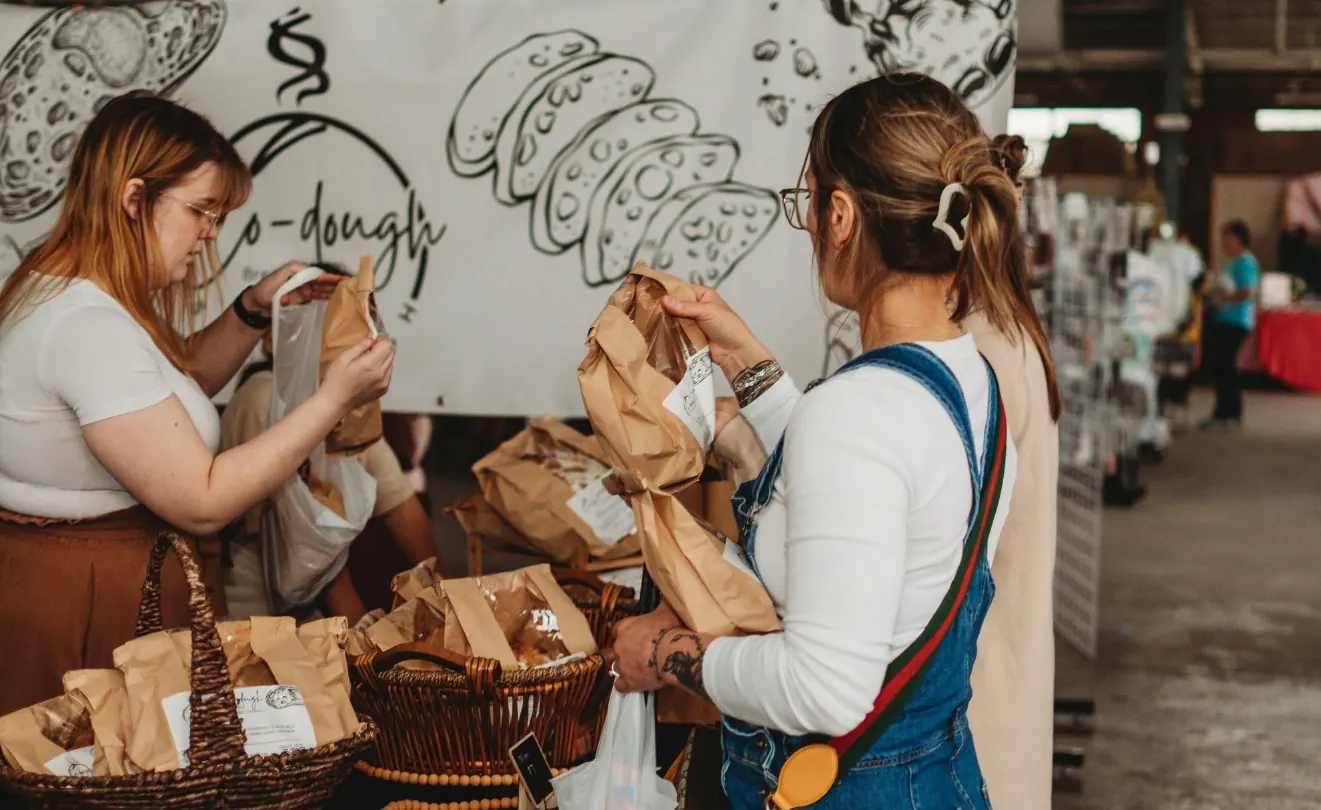
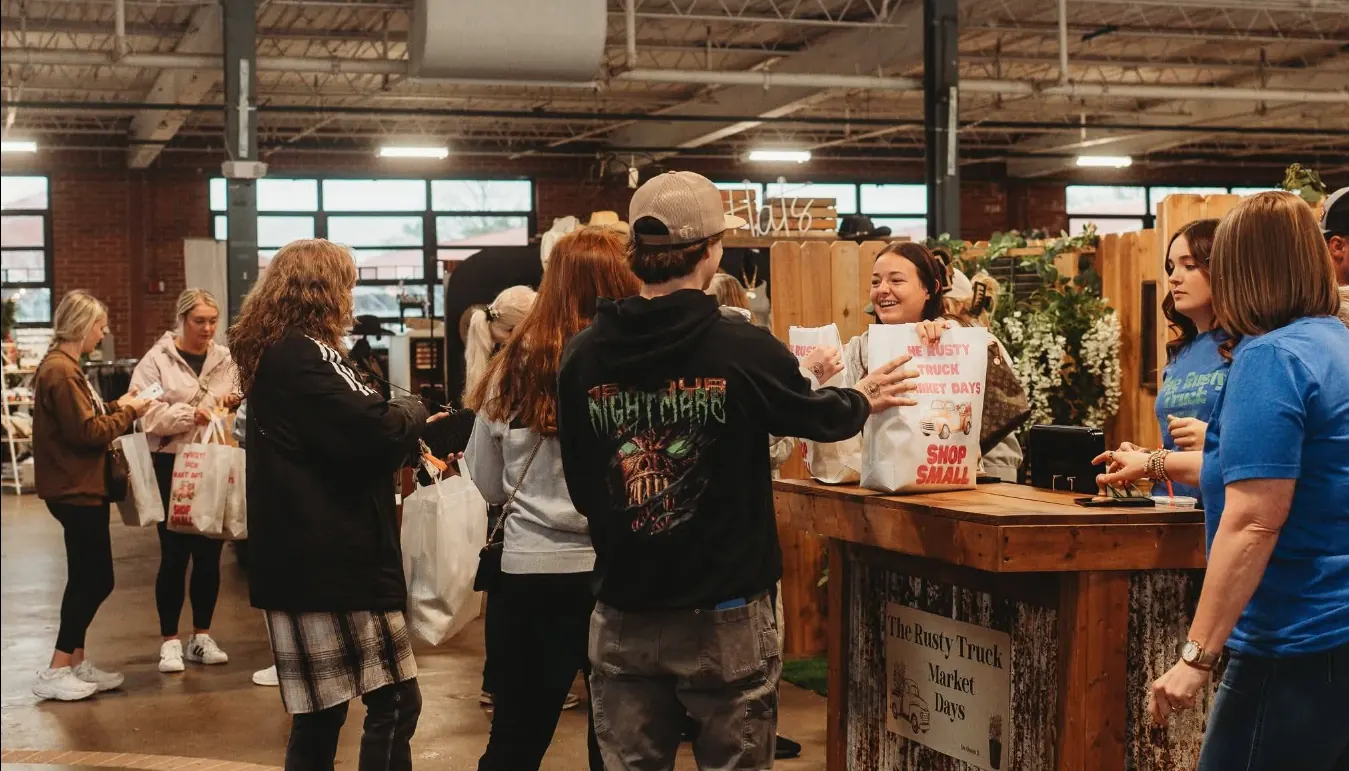
A baker bagging an order 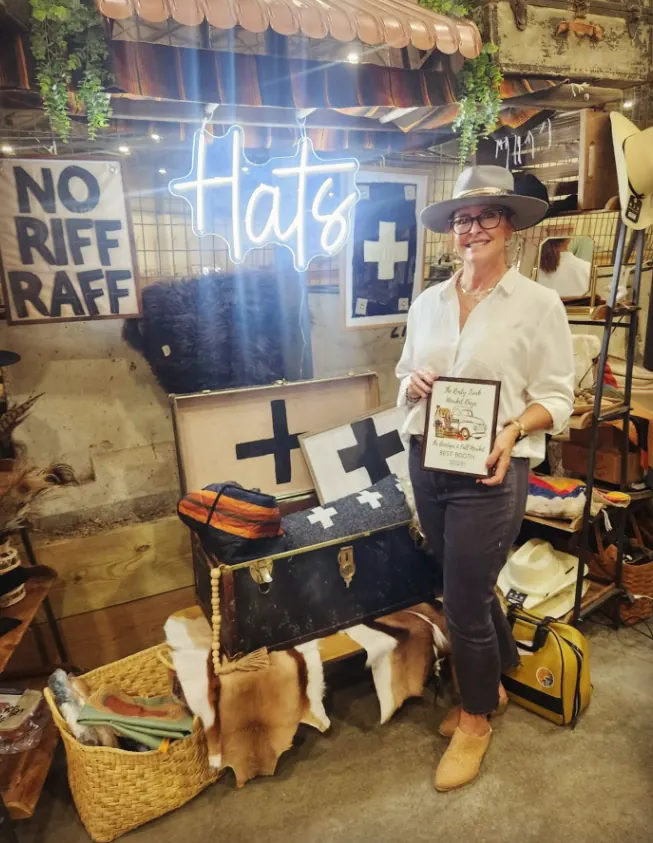
A vendor showing a framed print 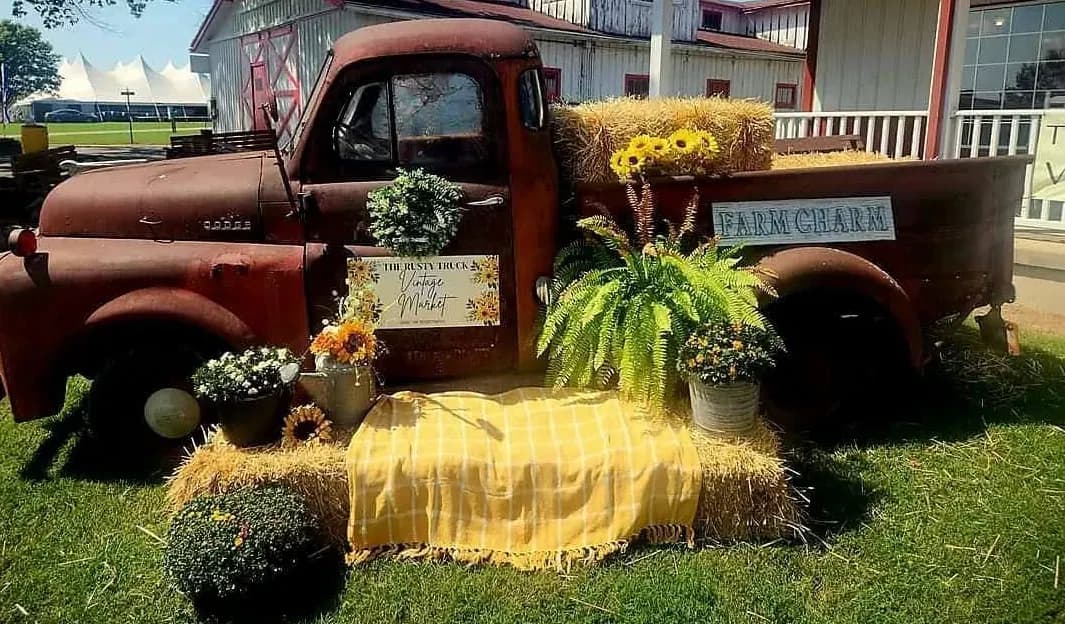
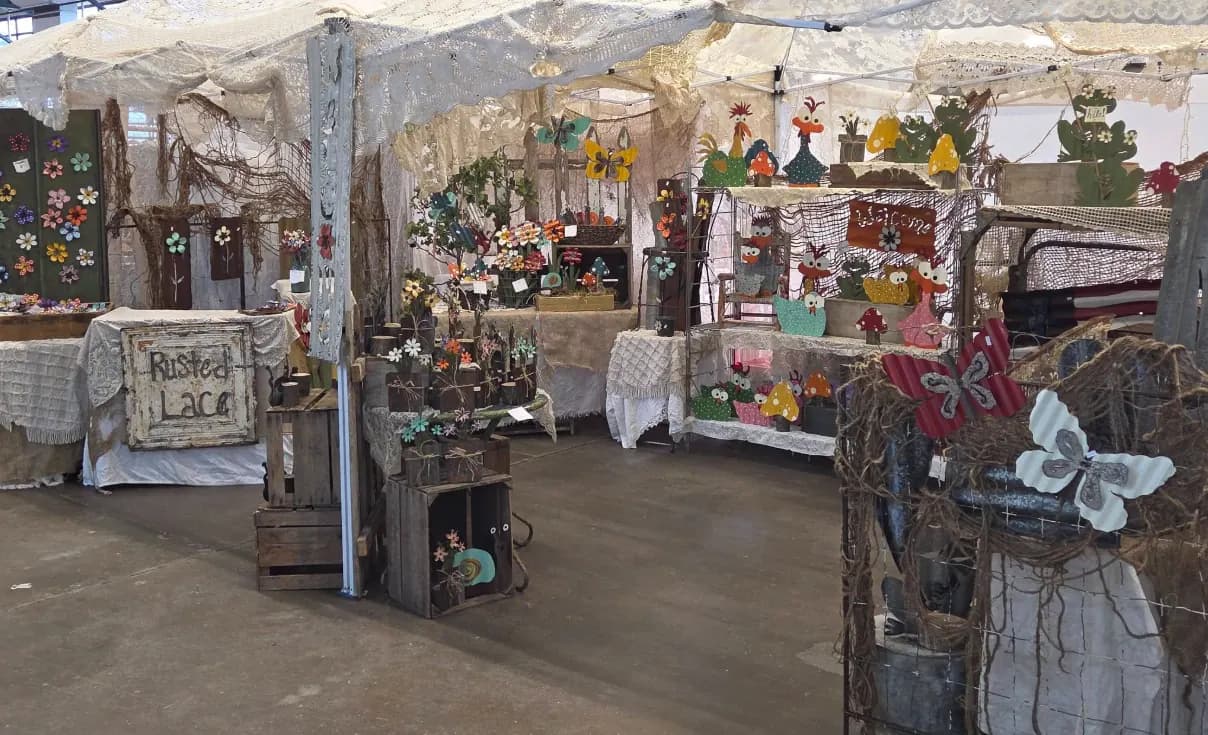
A vintage truck as the display 
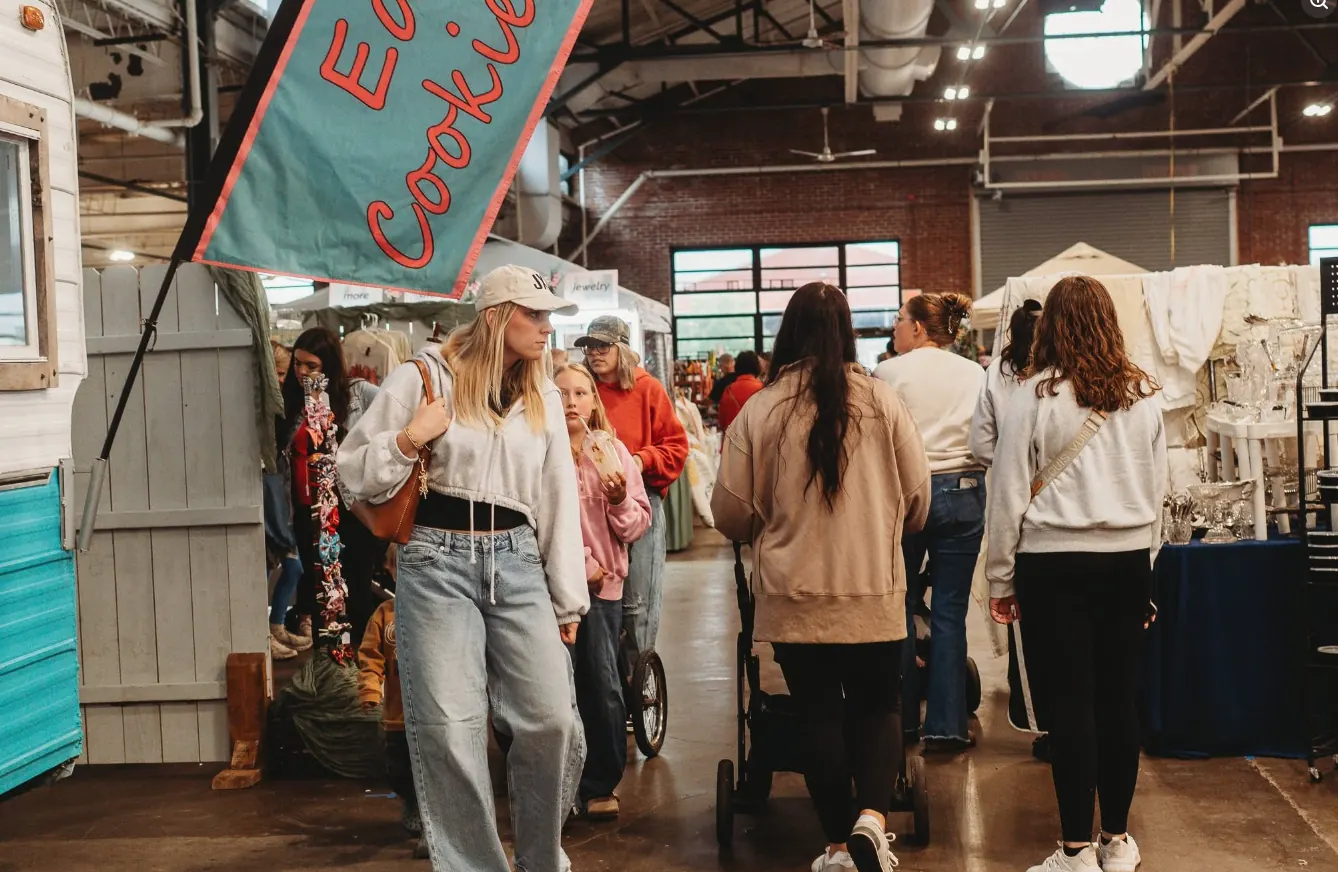
Shoppers browsing the booths 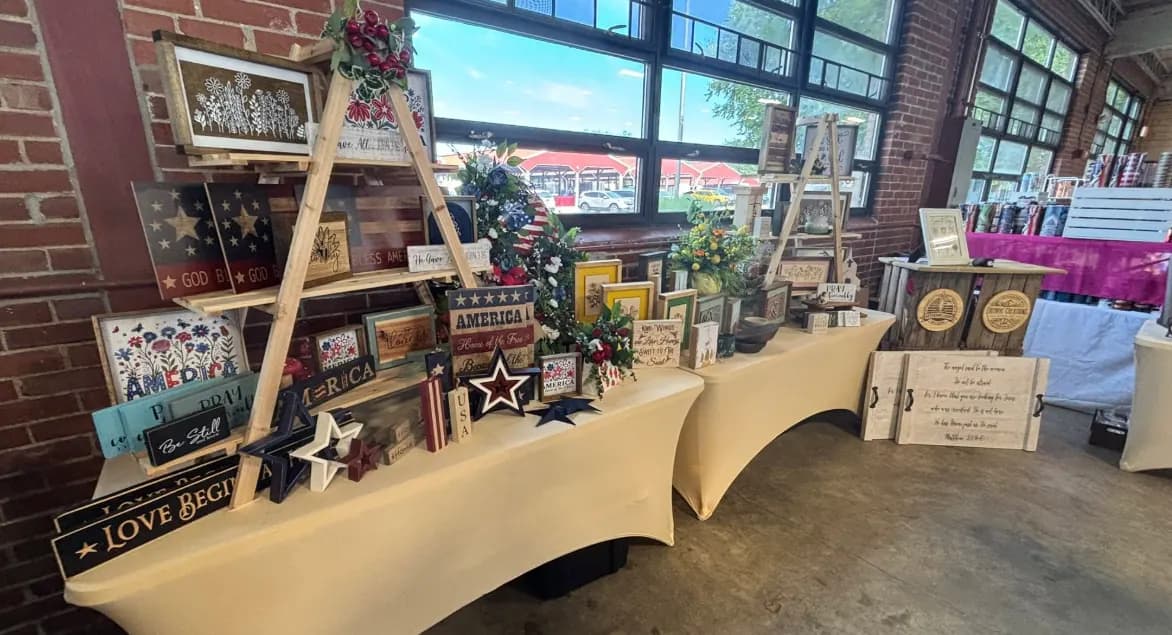
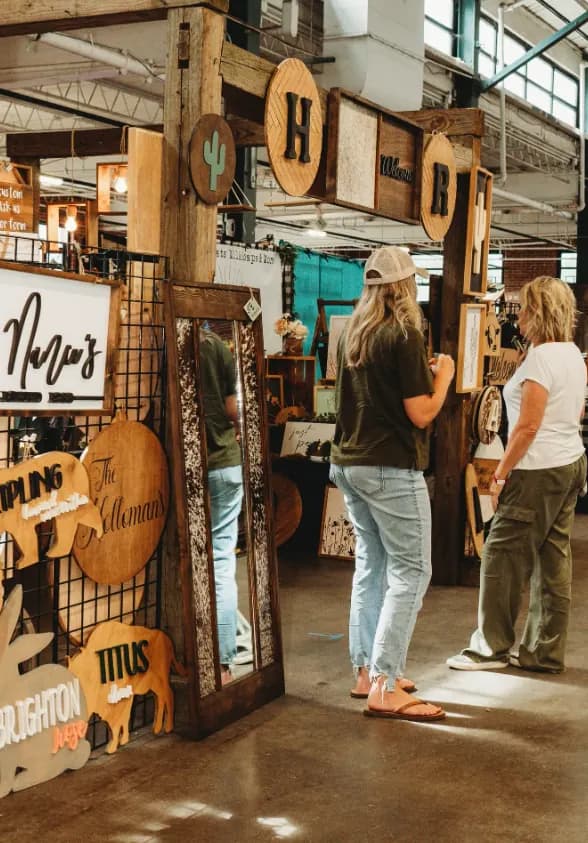
Signs and home decor 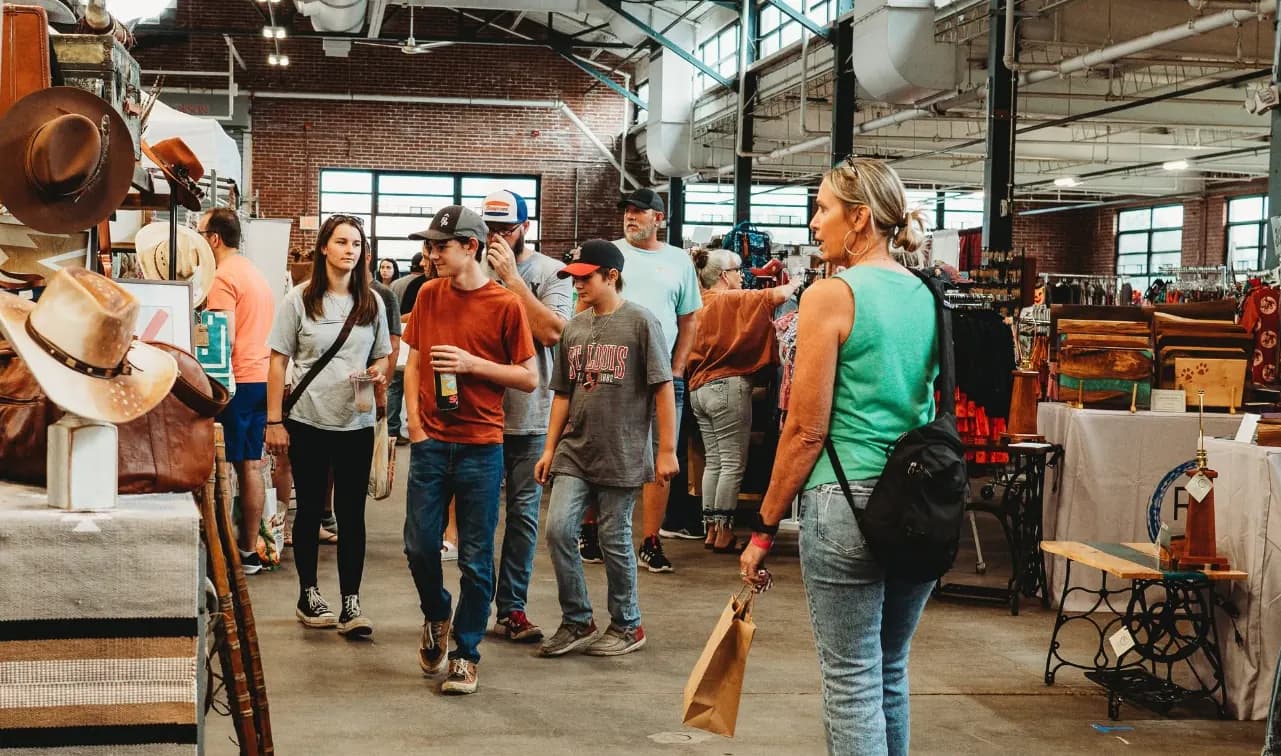
Shoppers walking an aisle

Ready to host your show?
My Vendor Show takes your vendor applications, collects booth fees by card, and lays out your booth map, with every email to vendors written for you.
Free for hosts. Vendors who pay online pay a small booking fee: 3%, never more than $5 a booth, unless you choose to cover it. Square takes its usual card fee.
Sign up free