Insurance, permits and sales tax
What to check before your show: event insurance, vendors' certificates, permits, food, raffles, and what each state asks of hosts about sales tax.
Last checked October 27, 2026
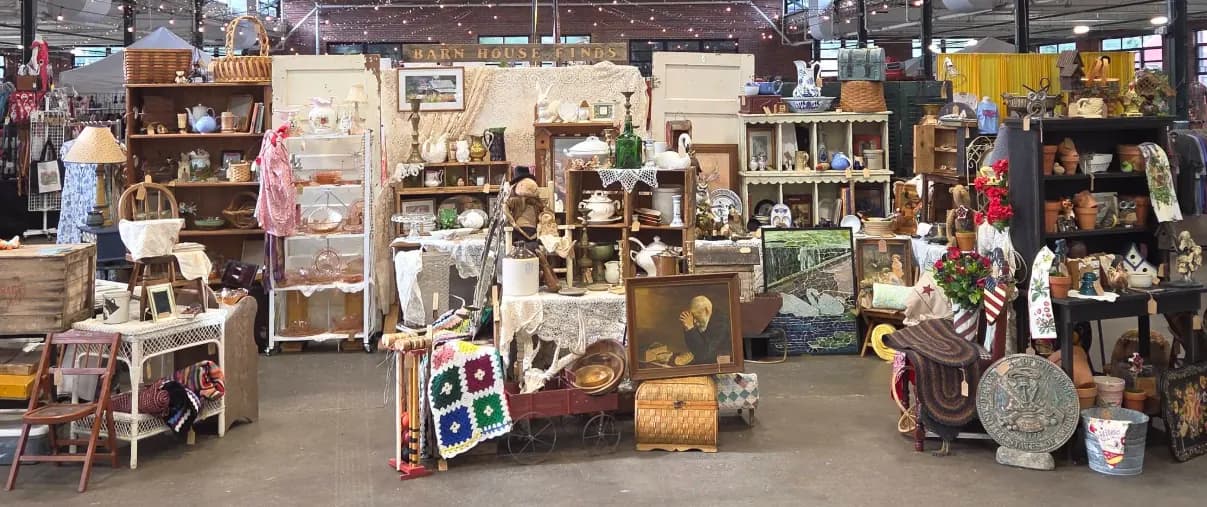
This guide is for the paperwork around a show: your own insurance and your vendors', permits from the city and the fire marshal, food, raffles, and sales tax, with what every state asks of hosts. It comes from each state's own pages, the FDA, the IRS, health and fire departments, cities and insurance regulators, quoted below.
Check your own state, county and city. Everything here is where to start, as we read each official page on October 27, 2026. Rules change, cities and counties add their own, and we may have missed something. Open your state's own page, read it yourself, and call them if anything's unclear. This isn't legal or tax advice: for your own situation, ask a lawyer or a tax professional.
In short: call the city, the fire marshal, the health department and your state's revenue department as soon as the venue is booked. Buy event insurance and decide what you'll ask of vendors. Ask every vendor for their sales tax permit number. And read your own state's page on what hosts must do, because in most states you have duties of your own.
1. Who to call, and when
Start the week you book the venue. Lead times run from 10 days to four months, and some permits wait on others.
- The venue: the insurance it wants from you, with the wording, and when; whether it needs the fire marshal's approval first; and what it provides (tables, power, toilets).
- The city or county special events office: whether you need a special event permit, and for tents, sound, signs, street use or vendors' licenses (step 4).
- The fire marshal: your floor plan, tents, and fire extinguishers (step 4).
- The health department, if anyone sells food, even wrapped cookies (step 5).
- Your state's revenue department: what hosts must do about vendors' sales tax, before and after the show (steps 7 and 8).
- Raffles: your state's gaming or charity regulator, before you sell a ticket (step 6).
2. Your event insurance
- Venues and cities usually ask for $1 million per occurrence and $2 million in total, with them named as additional insured. The City of Tampa's parks (2026) and the Lewis County Fair in New York ask for exactly that; Seattle and a Washington school district ask for $1 million per occurrence.
- Ask when they want it. Seattle wants it 30 days before, a school district 7 business days, and the Colorado Convention Center 60 days before move-in. Ask for the exact wording too: Seattle turns down certificates that say "IS required by" or "AS PER written agreement."
- What a general liability policy doesn't cover:
- What your vendors sell. "Commercial Liability Insurance covers the market site but does not cover individual vendor space and/or product liability concerns" (the Vermont Farmers Market Association). That's why many shows ask vendors for their own insurance (step 3).
- Cancellation. Liability insurance "does not offer cancellation protection" (the National Association of Insurance Commissioners). Vendor rules, refunds and bad weather covers cancellation insurance.
- Alcohol. A standard policy "does not protect your business against liquor-related claims" (the Insurance Information Institute). Tampa requires liquor liability whenever alcohol is "sold, served or distributed," and Seattle accepts host liquor coverage only when drinks are free.
- Employees. Businesses with employees need workers' compensation, which differs by state (the Small Business Administration).
- What it costs: Insureon, an insurance broker, says its customers pay an average of $278 for one-day special event coverage (April 2026). The price rises with the crowd, alcohol and the number of days.
- Some venues want one policy for the whole show. The Flathead County Fairgrounds in Montana: "Multi-vendor events must obtain a special event policy covering vendors and Flathead County."
3. Vendors' insurance
Decide what you'll ask, and say so on the application. Shows split three ways:
- Every vendor: the MOFGA Common Ground Country Fair in Maine asks every vendor for a certificate of insurance with $1 million per occurrence and $2 million in total, naming the fair as additional insured, due months ahead, or "you will not be allowed to set up." Dickinson, North Dakota's parks want the same 14 days before.
- Some vendors only: the Bluemont Fair in Virginia asks for it by kind of vendor, including food.
- Recommended only: Waterford Township's indoor craft show in Michigan advises vendors to carry their own insurance.
Amounts vary: $1 million per occurrence is the most common, but Cape May, New Jersey's craft show asks for $100,000.
How to read a certificate of insurance (the ACORD 25 form most agents use):
- It isn't the policy. "This certificate is issued as a matter of information only and confers no rights upon the certificate holder" (ACORD 25). Nebraska's Department of Insurance: certificates "do not and cannot amend, extend, or alter insurance coverage."
- Being named as additional insured takes an endorsement to the policy; the certificate alone doesn't do it. Ask for the endorsement if you require it.
- Check that the named insured matches the vendor, that the dates cover your setup through teardown, that a policy number is listed, and that it came from the agent (Wellesley College's guide for its departments).
- Check the products line. A cheap short-term policy can leave products out: ACT, an insurance agency, lists "Products Completed Operations Aggregate: Excluded" on its one-to-three-day policy ($49), but $2 million on its yearly one ($279).
On My Vendor Show: the application can ask for a certificate of insurance from every vendor or only food and drink vendors, due a set number of days before the show. Vendors add it when they apply or later from their own page, they're reminded a week before and on the day it's due, and you see who's sent it, who's late, and can mark a certificate received or not needed.
Sign up freeFrom real vendor shows
4. Permits from the city and the fire marshal
- A special event permit is usually needed on public property, or for a crowd, tents, amplified sound, alcohol or a closed street. Boulder, Colorado's starts at 50 people. On private property it often isn't (Lowell, Massachusetts), but sometimes is: Wayzata, Minnesota charges $139 with 10 days' notice.
- The bigger the event, the earlier you apply. Wayzata wants 30 days for up to 99 people, 60 days for up to 499, and 90 days and the city council beyond that. Flint, Michigan wants 60 days, and Morgan Hill, California four months.
- Tents: under the 2024 International Fire Code, as Thornton, Colorado's fire department puts it, a tent over 400 square feet needs a permit, and canopies open on all sides are exempt up to 700 square feet only with 12 feet between them and other tents or buildings. Expect to show a certificate of flame resistance. Illinois's State Fire Marshal counts pop-up canopies as tents at the state fairgrounds and wants a fire extinguisher in every booth.
- Indoors, the fire marshal reviews your floor plan. Portland, Oregon's fire department wants a permit for trade shows with six or more booths and the plan 21 days before, approved by the venue first. Charlotte, North Carolina's wants it 15 days before for crowds over 400. How to lay out a booth map covers aisles and exits.
- Sound, signs and toilets: Rock Island, Illinois charges $25 a day for amplified sound, with neighbors' signatures. Most cities ban signs in the public right of way, like Citrus Heights, California. San Diego recommends one portable toilet for every 250 people, a tenth of them accessible.
- Vendors' own licenses: some cities license each vendor; Seattle requires a city business license, or a trade show license of $10 a day for each unlicensed vendor at shows of 25 or more. Others license the host: Morton, Illinois issues one $250 special event license to the organizer, with the vendor list due 30 days before.
5. Food
Food rules are local. Call your county or city health department before you accept a food vendor.
- Food stands at your show are "temporary food establishments." The FDA Food Code (2026 edition), which most states follow, defines one as operating "for a period of no more than 14 consecutive days in conjunction with a single event or celebration," and it needs a permit from the local health department.
- Health departments often ask the host, too. Georgia's organizer application wants the list of food vendors at least 30 days before, and makes it "THE ORGANIZER'S AND/OR PROPERTY OWNER'S RESPONSIBILITY TO ENSURE THAT ONLY VENDORS PERMITTED BY THE HEALTH AUTHORITY SHALL PARTICIPATE." A Virginia health district wants the coordinator's application and a site sketch 30 days before. Seattle and King County require an event coordinator for six or more food vendors ($252), and Houston wants the list for 15 or more.
- Hand-washing and samples. Open food needs a hand-washing station with warm water, soap and paper towels (Greene County, Ohio). Oklahoma City's health department wants a hand sink within 25 feet of anyone giving samples, unless every sample is wrapped, and in King County a vendor with only packaged food can't give unwrapped samples.
- Food trucks need their own mobile food permit, plus whatever your event needs (Seattle also wants a fire department permit for propane or open flame). In Texas, mobile food vendors have had one statewide license since July 1, 2026.
- Home bakers sell under their state's cottage food law, and the rules differ a lot. The National Agricultural Law Center lists every state's. In Ohio, cottage food may be sold at a festival only if a city, county or other government body runs it; Illinois and Minnesota allow community events with the baker registered.
6. Raffles, 50/50s and door prizes
A raffle can be illegal gambling. Check your state's rules before you sell a ticket.
- A raffle is a lottery when it has a prize, chance, and something paid to enter. "If one of the elements is eliminated, the promotion is not a lottery" (Wisconsin's Division of Gaming).
- States differ widely:
- Washington: "Individuals and commercial businesses cannot offer raffles, even if the money is given to charity."
- California: only eligible nonprofits, registered at least 60 days before, and 50/50 raffles are illegal unless they qualify under a separate law.
- New York: no filing under $5,000 in net proceeds, a form above that, and a license from $30,000.
- Minnesota: no registration if all prizes in a year are worth $1,500 or less.
- Ohio: only listed nonprofits and schools; for anyone else it's a misdemeanor.
- Utah: a raffle is gambling, which is illegal.
- A free door prize drawing is usually fine when no purchase or admission fee is needed to enter (Wisconsin's Division of Gaming). If you charge admission, ask your state whether that counts.
- Big prizes have federal rules. Raffle winnings over $5,000 have 24% withheld for federal tax (IRS Publication 3079), and for 2026, a prize of $2,000 or more is reported on Form W-2G (IRS).
7. Sales tax: what vendors do, and what you do
- Vendors collect and pay their own sales tax, and most states want them registered even for one show: "even if you will only be making sales for one day" (Connecticut). See your state below.
- Most states give hosts duties too: checking that each vendor has a permit, keeping or sending a list of vendors, telling the state about the show, or even collecting the tax for vendors without a permit. In Mississippi, the host is treated as the seller of everything sold at the show.
- Your own fees may be taxable. Many states tax admission tickets, and you collect that tax. A few tax the booth fees you charge: South Dakota, West Virginia (rentals of 30 days or less), Hawaii's general excise tax and Arizona. In Vermont and Wisconsin, separate charges for tables or electricity are taxable.
- Ask every vendor for their sales tax permit number on the application. In most states that's what you'll be asked to check, keep or report.
On My Vendor Show: the application can ask for each vendor's sales tax or seller's permit number, and suggests it for shows in the states that expect hosts to check permits. Download CSV on the Applications tab gives you every vendor's answers, permit numbers included, for your state's vendor list.
Sign up free8. Sales tax, state by state
Check your own state, county and city. Everything here is where to start, as we read each official page on October 27, 2026. Rules change, cities and counties add their own, and we may have missed something. Open your state's own page, read it yourself, and call them if anything's unclear. This isn't legal or tax advice: for your own situation, ask a lawyer or a tax professional.
States that give hosts duties about vendors' sales tax:
- Arkansas: Register as a promoter (Form ST-371) at least two weeks before, give vendors the special event reporting forms, collect the tax from vendors without an Arkansas permit and send it in with their reports, and send a list of all vendors after the event. Tickets are taxable. Official page
- California: Before renting space, get written proof that each seller holds a seller's permit (or doesn't need one), and keep it four years. Send your vendor list within 30 days if the state asks. Up to $1,000 for each seller without records. Vendors need a temporary seller's permit for a location used less than 90 days. Official page
- Colorado: Tell each seller the taxes and rates that apply, and send the list of sellers with their special event license numbers within 10 days after the last day. Vendors get a special event license before the event. Many home-rule cities collect their own sales tax. Official page
- District of Columbia: At events with 50 or more vendors: register as a promoter (Form FR-500B), tell vendors they must collect DC sales tax, and send a preliminary vendor list at least 30 days before and the final list within 10 days after. Penalties start at $1,000. Official page
- Idaho: Register the event beforehand and give vendors its Event ID, make sure every vendor registers, and get proof of each vendor's permit (or that they sell nothing taxable) before renting space, sent in within 10 days after the event begins. Up to $1,000 per event. Admissions are taxable. Official page
- Illinois: Tell the Department of Revenue about the show at least 30 days ahead, hand vendors its packet, and report every vendor, with their Illinois account ID, by the 20th of the next month. Up to $250. Official page
- Iowa: Register the event with the Department of Revenue and list every vendor making taxable sales. Get proof of each vendor's permit, or a statement that what they sell isn't taxable, or you're liable for their unpaid tax. Admissions are taxable. Official page
- Kansas: Tell the Department of Revenue the dates, request vendor packets 30 days before (Form CTE-51), tell vendors the state and local rates, and within 14 days after, email a list of all vendors with their Kansas sales tax account numbers. Admissions are taxable. Official page
- Louisiana: Notify the Department of Revenue and send a list of every vendor before the event (its pages say 30 days, and also two weeks) and an updated list within two weeks after, and tell vendors the state and local rates. Local sales taxes are collected separately, so contact the local taxing authority too. Official page
- Maryland: Before the show, get from each exhibitor a copy of their trader's license or an Exhibitor's Affidavit, displayed at the show, and send all affidavits to the Comptroller within 7 days after. Shows run by churches, governments and fire companies are partly exempt. Official page
- Massachusetts: File a notice with the Department of Revenue at least 10 days before each show, display its certificate at the main entrance, and let only registered vendors sell taxable goods. Official page
- Michigan: Hosts are liable for the tax on sales by anyone selling without a sales tax license, so check each vendor's license. Government and nonprofit sponsors can spare vendors a transient merchant license by sending the vendor list to the county and state treasurers. Official page
- Minnesota: Before renting space, get Form ST19 (or a similar statement) from each seller, and keep it three and a half years. $100 for each seller not in compliance, for each day. This applies to nonprofits too. Booth space and tickets to craft shows and flea markets aren't taxable. Official page
- Mississippi: The host is treated as the seller: the owner, promoter or operator of a flea market or promoted event collects and pays the sales tax on all vendors' sales. Admissions are taxable, except to county, state and community fairs. Official page
- Nebraska: Give the Department of Revenue the dates, a contact and a list of all sellers with their Nebraska sales tax IDs, hand out its materials, and tell sellers the state and local rates. You collect the tax on admissions, and need your own permit for that. Official page
- Nevada: Register at least two weeks before and upload a vendor list, hand each vendor a one-time sales tax return, collect the returns and tax from every vendor before they leave, send a final vendor list, and pay the tax for vendors without a Nevada account. Official page
- New Jersey: Send the Division of Taxation a vendor list (names, addresses, tax IDs and what they sell) at least three weeks before the event. Every vendor registers at least 15 business days before selling. Official page
- New York: If you run four or more shows a year: apply for a permit (Form DTF-723) at least 10 days before the fourth, let only vendors with a Certificate of Authority sell, keep each vendor's statement, and report vendors (Form DTF-727) by the 20th of the next month. Vendors need a Certificate of Authority even for one craft fair a year. Official page
- North Carolina: Keep a daily list of every vendor's name, address and certificate of registration number, see each certificate and have it displayed, and keep the list two years. Admissions are taxable. Official page
- North Dakota: At events with 25 or more vendors, send a list of vendors with their sales tax permit numbers within 20 days after (Form SFN 21911). $250 per event. Official page
- Ohio: Keep a record of each vendor's name, address, vendor's license number and what they sold, for four years. Vendors from away need a transient vendor's license. Official page
- Oklahoma: Apply for a special event permit (Form 13-90) at least 20 days before, send a vendor list 10 days before and another within 15 days after, and collect and send in the tax for vendors without a permit. Fairs, school and church events don't count. Official page
- Pennsylvania: Get a promoter license at least 30 days before your first show, renewed each year, and let only licensed vendors sell, keeping their information. Vendors from other states need a transient vendor certificate. Official page
- Rhode Island: Get a promoter permit at least 10 days before each show. Keep a copy of each vendor's sales permit, give the others a temporary permit packet, collect their tax at the close, and send a monthly report of every seller. Official page
- Tennessee: Register each event with the Department of Revenue, and give every vendor a copy of its letter and the vendor registration form. Tickets are taxable. Official page
- Texas: Make sure every vendor has an active Texas sales tax permit, or collect the tax on their sales yourself: you're liable for sellers without one. Keep the records four years. Admissions are taxable, and you collect that tax. Official page
- Utah: Collect each vendor's name, address, phone, special event tax ID and what they sell, and send the list on Form TC-791. Every vendor needs a special event taxpayer ID and a temporary license for each event. Admissions are taxable. Official page
- Vermont: At events with 25 or more vendors selling taxable goods, send the Department of Taxes a list of out-of-state vendors with their sales tax license numbers at least one business day before. Admissions are taxable. Booth fees aren't, but renting out tables or chairs is. Official page
- Washington: Check in good faith that each vendor is registered (your contract asks for their number), keep each vendor's name, address and number for a year, and send the list within 20 days if asked. $100 for each unregistered vendor. Official page
- Wisconsin: File Form S-240, listing every vendor, within 10 days after the event. $200 the first time you don't, then $500. Admissions are taxable. Booth space isn't, but separate charges for electricity or tables are. Official page
States with a smaller duty, or a tax on your own fees:
- Arizona: Keep a current list of your vendors (name, business name and address) and send it if the Department of Revenue asks in writing. Your own admissions and booth rent are taxable to you, and most cities want a license too. Official page
- Delaware: No sales tax. Nothing for most hosts; malls holding special events keep a vendor list for four years. Short-term sellers may need a business license, though crafts sold by the person who made them are exempt from the transient retailer rules. Official page
- Florida: Nothing found for craft shows or flea markets. Trade show organizers must let the Department see their exhibitor agreements. Vendors register as dealers and keep their certificate at the booth. Admissions are taxable. Official page
- Georgia: Nothing found for show hosts, except that sponsors of bazaars and school carnivals collect tax on their own admissions and sales. Vendors without a Georgia number use Form FS-32 for the event. Official page
- Hawaii: No vendor duties, but the fees you charge vendors are subject to Hawaii's general excise tax. Vendors need a general excise license; there's a one-time event option. Official page
- South Carolina: No set duty, but the Department of Revenue asks hosts to email it each vendor's details. If you charge admission, you collect the 5% admissions tax. At a free show, every vendor needs a retail license. Official page
- South Dakota: Tell your local Department of Revenue office about the event and hand vendors its forms. Your own booth fees and admissions are taxable: you owe sales tax on them. Official page
- West Virginia: No vendor list, but booth rentals of 30 days or less are taxable: you collect sales tax on your booth fees. Vendors from other states need a transient vendor license, though crafters selling their own work don't. Official page
States where we found nothing special for hosts:
- Alabama: Nothing special for hosts found. Vendors register for a sales tax account. Admissions to arts and crafts shows are taxed as amusements, and cities and counties have their own taxes. Official page
- Alaska: No state sales tax. About 110 cities and boroughs have their own sales tax; ask the one where your show is. Official page
- Connecticut: Nothing special for hosts found. Vendors need a sales tax permit even for one day. A separate 10% admissions tax covers fairgrounds, home shows and antique shows. Official page
- Indiana: Nothing special for hosts found. Vendors need a Registered Retail Merchant Certificate before selling, and some counties and cities license merchants. Official page
- Kentucky: Nothing special for hosts found. Vendors without an account file a temporary vendor return, and transient merchants get a county permit. Official page
- Maine: Nothing special for hosts found. Vendors register as retailers; bazaar sales by civic, religious and fraternal groups can be exempt casual sales. Official page
- Missouri: Nothing special for hosts found; every vendor needs its own Missouri tax ID. Admissions to amusements are taxable; vendor space isn't. Official page
- Montana: No general sales tax. Ten resort areas have a local resort tax of up to 3%. Official page
- New Hampshire: No general sales tax. Food vendors pay the meals and rentals tax and need a license before serving. Official page
- New Mexico: Nothing special for hosts found. Vendors register for gross receipts tax. Official page
- Oregon: No general sales tax. Official page
- Virginia: Nothing special for hosts found. Vendors register, or use a temporary certificate and return (Form ST-50) for a show. Official page
- Wyoming: Nothing special for hosts found. Vendors at craft shows can register for occasional sales. Admissions are taxable. Official page
From real vendor shows

9. Your own taxes
Ask a tax professional about your own taxes. What follows is only what the IRS says in general.
- Booth fees are income. "Whether or not you receive a Form 1099-K, you must still report any income on your tax return" (IRS).
- Form 1099-K: payment apps and online marketplaces send one when you're paid more than $20,000 in more than 200 payments in a year (for 2025 and 2026), and card processors can send one for any amount (IRS).
- Keep records that clearly show your income and expenses, as long as you might need them to prove your tax return (IRS). Whether your shows are a business or a hobby changes what you can deduct; the IRS lists the factors.
- Nonprofits running a show to raise money: income from a business regularly carried on and unrelated to the group's purpose can be taxed, but not when "substantially all the work" is done by volunteers. A group with $1,000 or more of such income files Form 990-T (IRS Publication 598).
On My Vendor Show: Financials for your books, on My Stats, lists a year's payments and refunds across your shows by the day they came in, with a CSV for your bookkeeper.
Sign up freeMistakes to avoid
- Assuming your insurance covers your vendors' products. It usually doesn't.
- Taking a certificate of insurance on trust, without checking the name, the dates and the products line.
- Applying for permits too late. Some cities want 60 or 90 days.
- A raffle without checking your state's rules, or a 50/50 where it's banned.
- Not asking vendors for their permit numbers, in a state where you'll need them.
- Forgetting the tax on your own admissions or booth fees.
- Relying on this guide instead of your own state's page.
Free printable: your state and city worksheet
Fill it in as you call each office. Check every answer on your own state's and city's pages: rules change, and this isn't legal or tax advice. We'll email you the link, to print or save as a PDF.
Where these numbers come from
Numbers marked as common practice come from many shows' published rules and prices, not from one source. The rest come from these pages:
- City of Tampa Parks & Recreation, Florida: special events insurance requirements (2026)
- City of Seattle Special Events Office: insurance
- Lewis County Fair, New York: grounds rental contract (2026)
- Mukilteo School District, Washington: facility use insurance
- Colorado Convention Center: insurance information
- Flathead County Fairgrounds, Montana: facilities and rentals
- Insurance Information Institute: commercial general liability insurance
- National Association of Insurance Commissioners: special event insurance
- U.S. Small Business Administration: get business insurance
- Vermont Farmers Market Association: market safety best practices (2022)
- Insureon (insurance broker): special event insurance cost (2026)
- MOFGA Common Ground Country Fair, Maine: vendor insurance (2025)
- Dickinson Parks & Recreation, North Dakota: vendor policy (2026)
- City of Cape May, New Jersey: craft show application (2026)
- Bluemont Fair, Virginia: insurance (2026)
- Waterford Township Parks, Michigan: arts and crafts show (2025)
- ACT (insurance agency): event insurance for vendors
- ACORD 25 certificate of liability insurance (2025 edition, via New York DFS)
- Nebraska Department of Insurance: certificates of insurance
- Wellesley College: how to read a certificate of insurance
- City of Boulder, Colorado: special events
- City of Wayzata, Minnesota: special event fees (2026)
- City of Flint, Michigan: special events and street closings
- City of Lowell, Massachusetts: events
- City of Morgan Hill, California: special event permits
- Thornton Fire Department, Colorado: tent checklist (2024 International Fire Code)
- Illinois State Fire Marshal: vendor fire safety rules
- Portland Fire & Rescue, Oregon: public assembly permits
- Charlotte Fire Department, North Carolina: trade show and exhibit requirements
- City of Rock Island, Illinois: sound amplification permit (2025)
- City of Citrus Heights, California: temporary signs
- City of San Diego: restrooms and sinks at special events
- City of Seattle Special Events Office: vendors
- Village of Morton, Illinois: itinerant merchant and special event licenses
- FDA: Food Code 2026
- Virginia Department of Health: temporary food event coordinator application (2026)
- Georgia Department of Public Health: temporary food event organizer application (2026)
- Public Health – Seattle & King County: temporary food business permit
- Houston Health Department: temporary food permits
- Greene County Public Health, Ohio: temporary food guidelines (2026)
- Oklahoma City-County Health Department: food sampling at temporary events
- City of Seattle: food service at special events
- Texas Department of State Health Services: HB 2844, mobile food vendors
- National Agricultural Law Center: cottage food laws by state
- Ohio Department of Agriculture: cottage food
- DuPage County Health Department, Illinois: cottage food
- Minnesota Department of Agriculture: cottage food producer registration
- Wisconsin Division of Gaming: contests, sweepstakes and sales promotions
- Washington State Gambling Commission: raffles
- California Attorney General: raffles
- New York State Gaming Commission: raffles
- Minnesota Statutes 349.166: exempt gambling
- Ohio Revised Code 2915.092: raffles
- Utah Code 76-9-1401: gambling definitions
- IRS: Publication 3079, tax-exempt organizations and gaming
- IRS: instructions for Forms W-2G and 5754 (2026)
- IRS: understanding your Form 1099-K
- IRS: instructions for Form 1099-K
- IRS: hobby or business
- IRS: recordkeeping for small businesses
- IRS: Publication 598, unrelated business income of exempt organizations
- Alabama Administrative Code 810-6-1 (sales tax rules)
- Alaska Division of Community and Regional Affairs: sales tax
- Arizona Department of Revenue: promoters of special events
- Arkansas Department of Finance and Administration: special event sales tax
- California Department of Tax and Fee Administration: Publication 111
- Colorado Department of Revenue: special event sales tax
- Connecticut Department of Revenue Services: sales tax information
- Delaware Code title 6, chapter 47: transient retailers
- D.C. Code 47-2002.04: special events
- Florida Department of Revenue: GT-300015, sales and use tax
- Georgia Department of Revenue: Form FS-32, miscellaneous sales event
- Hawaii Department of Taxation: general excise tax brochure
- Idaho State Tax Commission: promoter-sponsored events
- Illinois Department of Revenue: fairs, festivals and flea markets
- Indiana Department of Revenue: Bulletin 102, transient merchants
- Iowa Department of Revenue: special events tax permits
- Kansas Department of Revenue: special sales events
- Kentucky 103 KAR 25:060: temporary and transient vendors
- Louisiana Department of Revenue: fairs, festivals and special events
- Maine statute 36 §1754-B: registration of sellers
- Comptroller of Maryland: business licenses
- Massachusetts General Laws c. 62C §67A: show promoters
- Michigan Transient Merchants Act (MCL 445.371)
- Minnesota Department of Revenue: Fact Sheet 148
- Mississippi Department of Revenue: business tax questions
- Missouri Department of Revenue: special event sales
- Montana Department of Revenue: general sales tax
- Nebraska Department of Revenue: special event guide
- Nevada Department of Taxation: one-time event guidelines
- New Hampshire RSA 78-A: meals and rentals tax
- New Jersey Division of Taxation: promoters and event organizers
- New Mexico Taxation and Revenue: special events and vendors
- New York Department of Taxation and Finance: Form DTF-723 instructions
- North Carolina Department of Revenue: specialty markets and other events
- North Dakota Office of State Tax Commissioner: sales and use tax
- Ohio Revised Code 5739.17
- Oklahoma Tax Commission: Form 13-90, special event permit
- Oregon Department of Revenue: sales tax
- Pennsylvania Department of Revenue: sales, use and hotel occupancy tax
- Rhode Island Division of Taxation: show promoter checklist
- South Carolina Department of Revenue: events and festivals
- South Dakota Department of Revenue: special events
- Tennessee Department of Revenue: special events promoters
- Texas Comptroller: Publication 96-211
- Utah State Tax Commission: special events
- Vermont Department of Taxes: event organizers and vendors
- Virginia Tax: Form ST-50
- Washington Department of Revenue: special event promoters
- West Virginia Tax Division: TSD 447
- Wisconsin Department of Revenue: temporary events
- Wyoming Excise Tax Division: sales and use tax registration
Last checked October 27, 2026. This isn't legal or tax advice; rules differ by state and city.
From real vendor shows
Woven rugs and scarves 
Hair bows and bookmarks 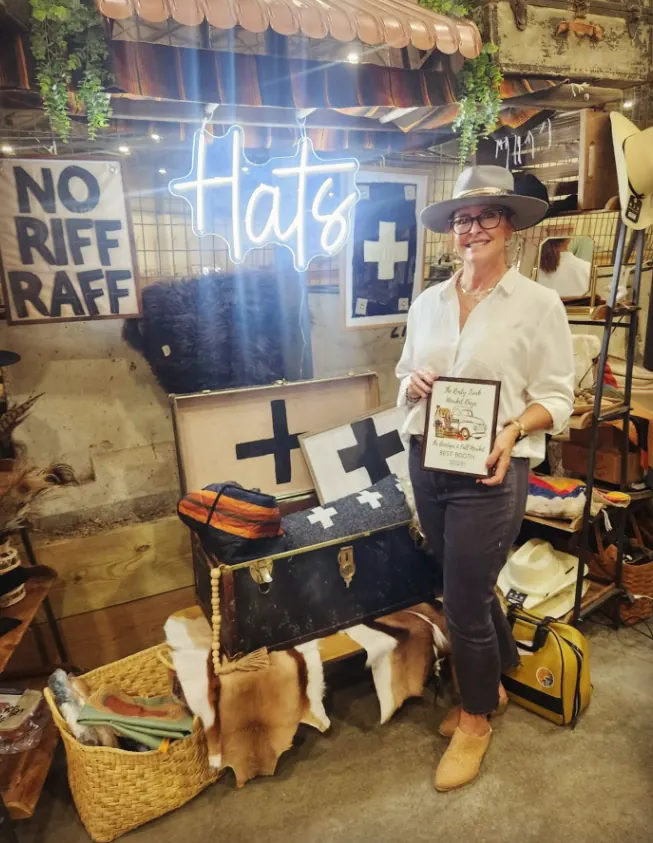
A vendor showing a framed print 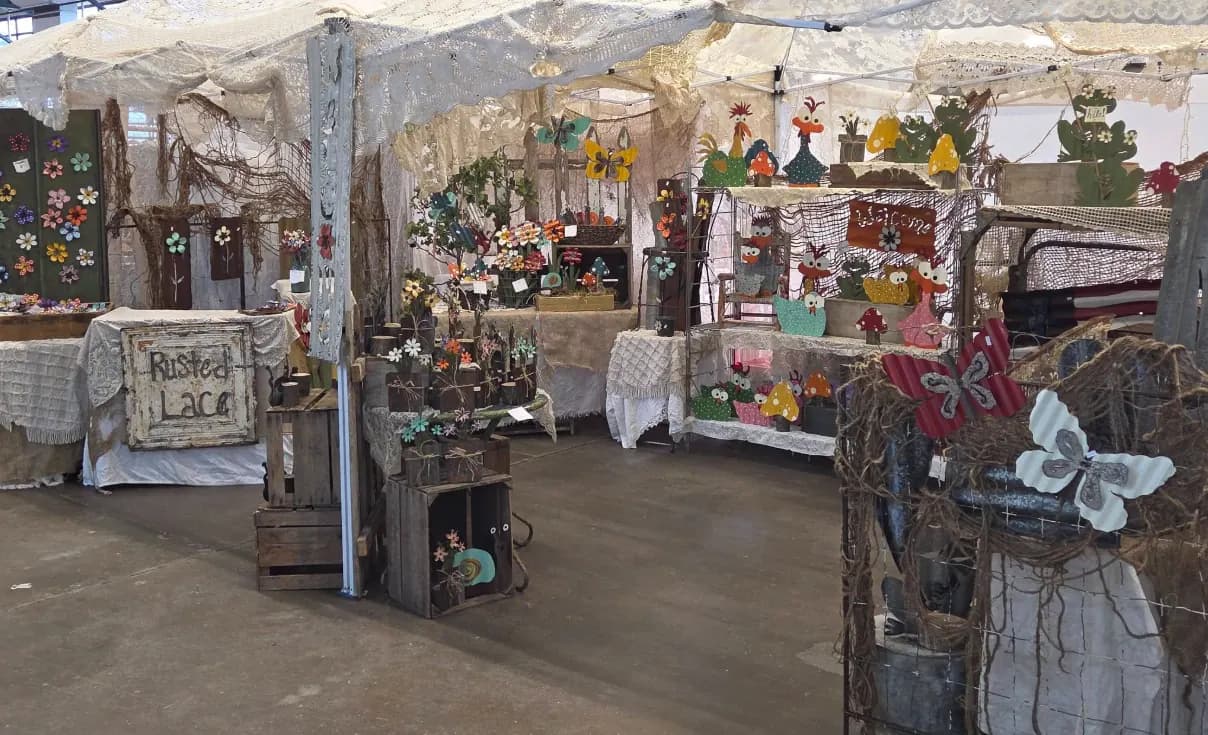
A booth of rustic decor 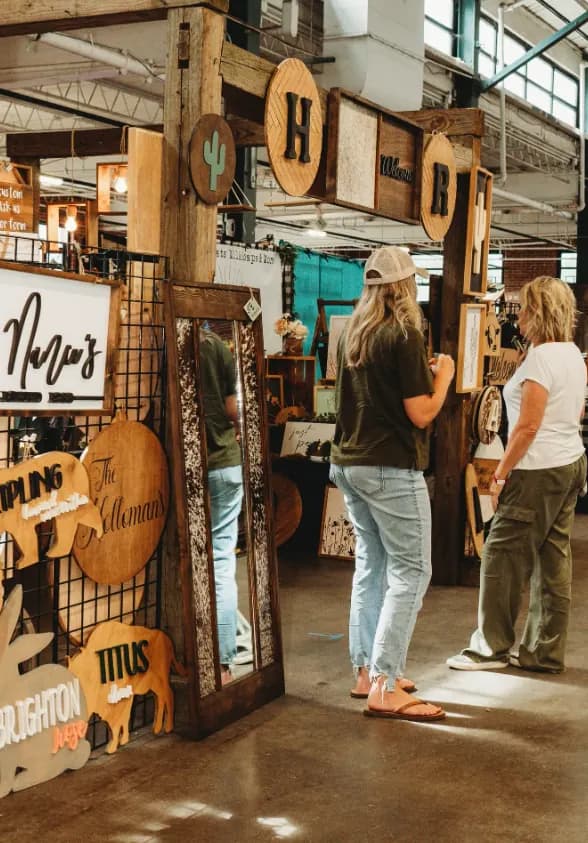
Shoppers at a booth of wooden signs 
Shoppers browsing the booths

Ready to host your show?
My Vendor Show takes your vendor applications, collects booth fees by card, and lays out your booth map, with every email to vendors written for you.
Free for hosts. Vendors who pay online pay a small booking fee: 3%, never more than $5 a booth, unless you choose to cover it. Square takes its usual card fee.
Sign up free