How much to charge for a booth
Set booth prices from your costs, a realistic fill and what vendors can sell, with real shows' prices for doubles, corners, power, food trucks and raises.
Last checked October 27, 2026

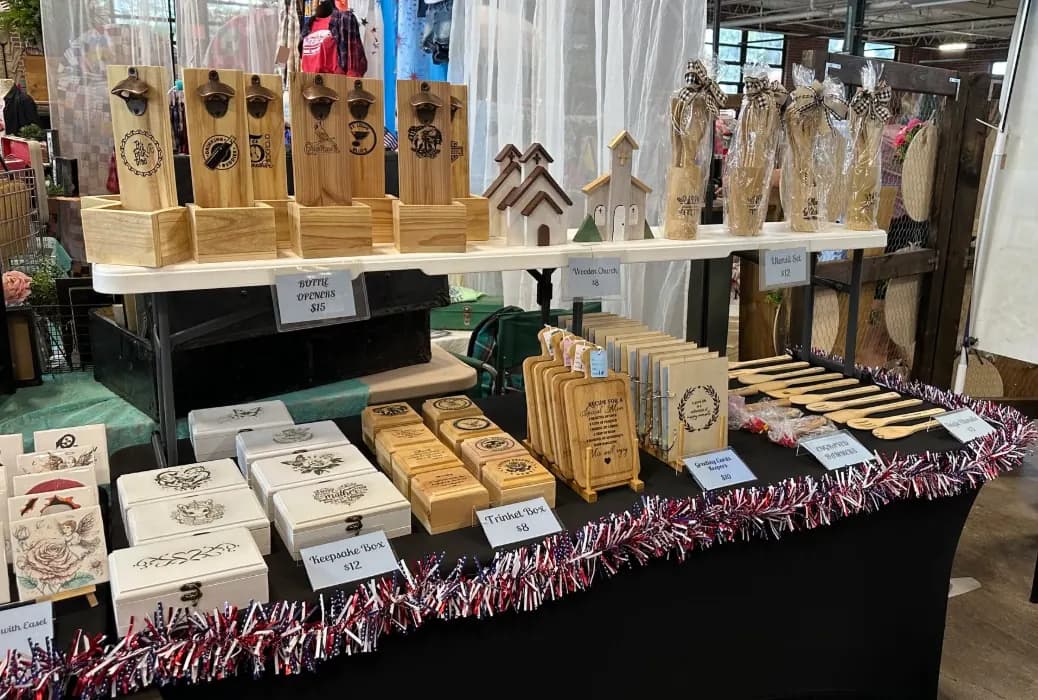
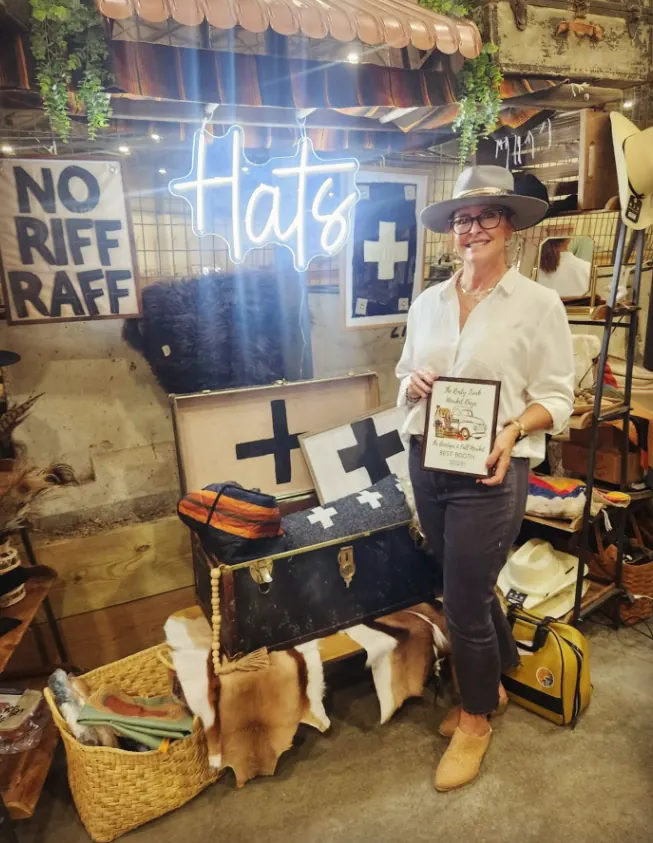
This guide is for setting booth prices at a craft fair, holiday market or vendor show, especially a first one. Most prices in it come from fee sheets that shows published for 2025 and 2026, from city parks departments to a private expo, each listed at the end. Where a number is only common practice, it says so.
In short:
- Add up what the show costs you, card fees included.
- Divide by the booths you expect to sell, not all of them, and charge 1.3 to 2 times that.
- Check the result against what shows near you charge and what a vendor can sell at yours.
1. Add up what the show costs you
Split your costs in two, because they behave differently when booths don't sell.
Costs that stay the same however many booths you sell:
- The venue's rent and deposit.
- Event insurance: about $280 for a one-day event (Insureon's average, April 2026).
- Permits: the city's event permit, and, in some places, a fee from the health department for organizing an event with food vendors. Ventura County, California, charges organizers $559 for a one-day event with 6 to 20 food vendors, and the Las Vegas area's health district charges event coordinators $200 to $399.
- Advertising: Facebook ads, flyers, signs, a banner, the local paper or radio.
- Printing, supplies and volunteers' food. Outdoors, add portable toilets, trash and hand-washing.
Costs for each booth you sell:
- Tables and chairs you rent for vendors.
- Electricity, if the venue charges you for each outlet or circuit.
- Pipe and drape, if the hall requires it.
- Card fees on what each vendor pays (step 9).
Then add 10 to 15% for surprises (common practice).
2. Find your break-even, counting on a partly full show
Your break-even booth price is your fixed costs divided by the booths you sell, plus your costs per booth.
A first show rarely sells out. Plan on selling about 70% of your booths (common practice), and see what happens if you sell fewer.
Example: $2,000 of fixed costs, 40 booths, and $12 per booth for a rented table and card fees.
- At 50% full (20 booths): $100 + $12 = $112 a booth to break even.
- At 70% full (28 booths): $71 + $12 = $83.
- At 90% full (36 booths): $56 + $12 = $68.
Then charge 1.3 to 2 times your 70% break-even (common practice): here, about $110 to $165. The extra covers a slow year, pays for your time and starts next year's venue deposit.
If that comes out well above what shows like yours charge nearby (step 4), don't just charge it: vendors compare. Find a cheaper venue, add booths, or spend less, until the numbers meet.
3. Work out what a vendor can sell
Vendors decide on your price by what they expect to sell. A common rule among crafters is to aim for at least 7 times the booth fee (SmartAsset's "7x rule"), so a $100 booth has to be somewhere a vendor can sell $700.
What they sell depends on how many shoppers come for each vendor. Real counts:
- A second-year school craft show in Marquette County, Michigan: about 500 shoppers and 75 vendors, about 7 for each vendor.
- Whitestown, Indiana's town winter market: over 300 shoppers and over 35 vendors, about 9 each.
- Salem, Virginia's holiday market at its civic center: over 2,400 shoppers in one day and over 100 vendors, about 24 each.
- Bloomington, Indiana's long-running city holiday market: about 6,900 shoppers and 75 vendors, over 90 each.
A rough way to check your price: what all your shoppers spend, divided by your vendors, divided by 7.
Example: 600 shoppers who each spend $40 in all (a made-up figure: ask a few vendors what shoppers spend at shows like yours) spend $24,000. Shared by 50 vendors, that's $480 each, which supports a booth fee of about $70 by the 7x rule. Twice the shoppers would support about $135.
That's why a new show, whose crowd nobody can predict yet, usually charges less, and why counting your shoppers is what lets you charge more later. Oregon State University Extension's method: at each entrance, count the adults who come in during 20 minutes of every hour, multiply by 3, and add up the hours.
From real vendor shows
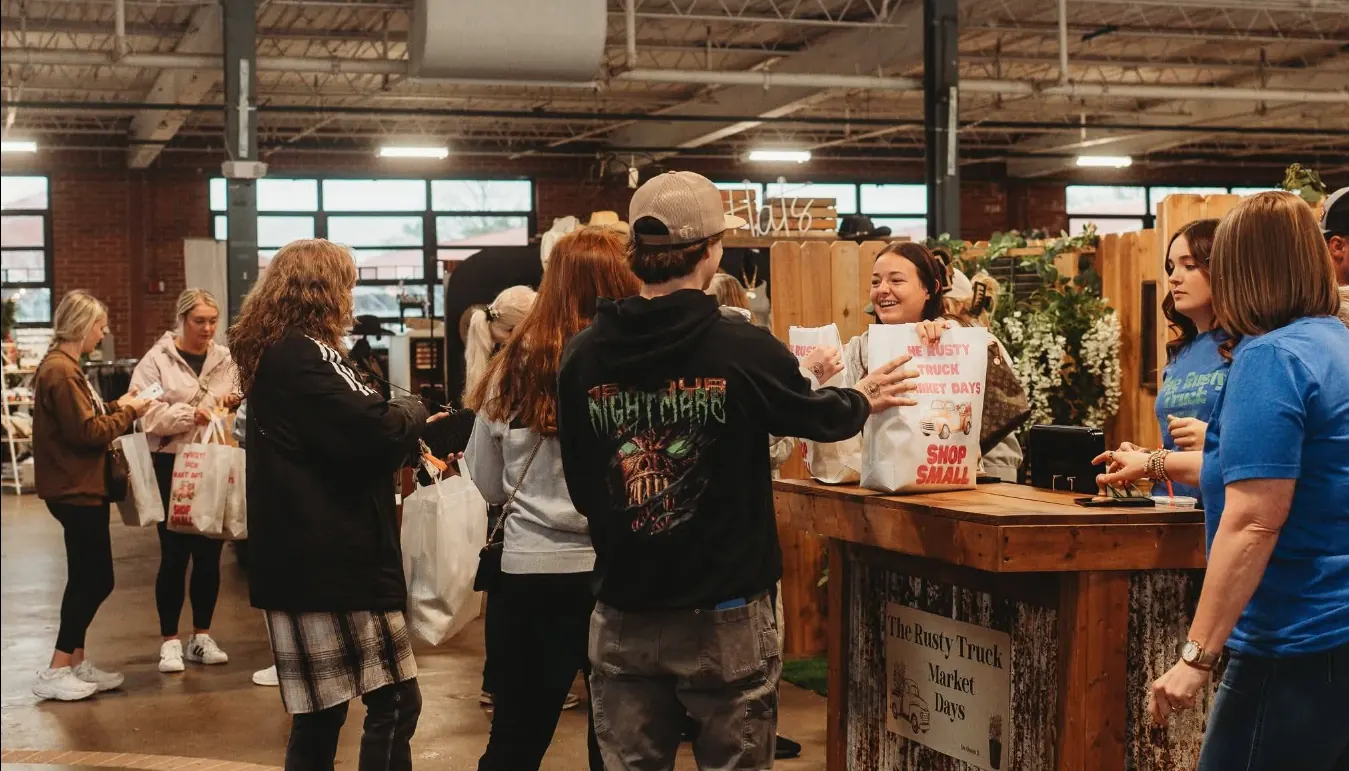
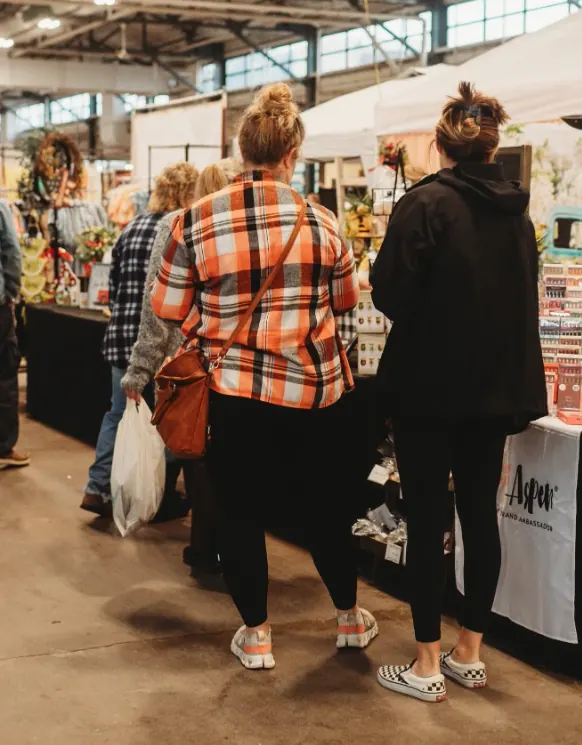
4. See what shows near you charge
Vendors compare prices, so you should too. Look up about 10 shows of your kind within an hour's drive, and note each one's booth size, price, what's included (a table, power, a tent), how many days it runs, and whether it sells out.
What shows published for 2025 and 2026:
- One-day community shows run by cities, park districts, libraries and nonprofits mostly charge $30 to $100, about $75 in the middle. Muncy, Pennsylvania's downtown holiday market charges $30 for an outdoor 10×10. Bartlett Park District, Illinois, charges $69 for an indoor space. Madison, Wisconsin's parks charge $70, including a table, two chairs and the vendor permit. Cameron Park, California, charges $95, and Orangevale, California, $102.
- Two-day, juried or big-hall shows charge more. Cape May, New Jersey's Crafts at Christmas is $175 for two days in its convention hall. The City of Fairfax, Virginia's holiday craft show is $200 to $275 for two days, depending on the room. A private holiday show at Billings, Montana's expo center is $325.
- Across every kind of show, craft fairs and holiday markets that publish a fee mostly charge $60 to $350, with the middle around $140 to $180 (common practice).
Shows run by cities and park districts are often cheaper because they use their own parks and buildings and don't have to make money. If you rent a hall, compare yourself with other shows in rented halls too.
Indoors or out: where a show has both, indoor spaces often cost 1.2 to 1.7 times as much. Portland, Tennessee, charges $50 inside and $30 outside, and the Stanislaus County fairgrounds in California $125 and $100. Indoors comes with a roof and light, and often a table. Plenty of shows charge the same for both. It's your call, as long as vendors know what they're getting.
5. Price sizes, doubles and corners
- The standard booth is 10×10 feet (the International Association of Exhibitions and Events). Indoors, many shows sell smaller spaces, like 10×6 or 8×10, often with a table.
- Doubles cost 1.5 to 2 times a single, about 1.9 times most often. Cayuga Community College's craft fair in New York charges $100 and $200. Orangevale charges $102, and $92 more for the connecting booth. Burton, Texas, charges $65 for a 10×10, $115 for a 10×20 and $165 for a 10×30. Like Burton, many shows take a little off the second booth.
- Corners cost $10 to $50 more, about 10 to 20% of the booth. Orangevale adds $10, "due to higher foot traffic and additional selling sides." Lawrence, Kansas, adds $20 for a corner with two open sides, and $60 for three. The McGroarty Arts Center in Los Angeles adds $25. The private show in Billings adds $50. Some shows give corners free, first come first served (Harrisonburg, Virginia).
- Better spots can cost more too. The McGroarty Arts Center charges $25 more for spaces under its own canopy with power.
- Or price by the square foot, if your spaces vary. For example, at $1 a square foot, a 10×10 is $100 and a 10×15 is $150. Downtown Muncy prices food trucks by length.
6. Electricity, tables and other extras
- Electricity: at shows run by cities and nonprofits, $5 to $30, most often $10. Madison charges $5, Bartlett $10, Calhoun County, South Carolina, $15 a line, Destrehan Plantation in Louisiana $25 an outlet, and Ely, Minnesota, $30 a plug. In a rented hall, the venue may charge you for each outlet or circuit, so ask before you set your price, then charge what it costs you plus a little. In rented halls that's often $25 to $50 a booth (common practice): the private show in Billings charges $50 for a booth's 110-volt power.
- Say what the power is. Oxnard, California, charges $25 for a 20-amp hookup. Charge by the outlet, not the vendor, and say whether heaters and coffee makers are allowed.
- Tables and chairs: many shows provide none. Those that rent them charge $10 to $20: Cayuga $10 for a table and two chairs, Bartlett $20 a table. Some include one in the price (Madison, Harrisonburg).
- List what the fee includes on your application: the space's size, tables, chairs, power, a tent, parking. Surprise charges at check-in are a common complaint.
7. Food vendors and food trucks
- Food usually costs more, often about double. At 15 city, town and chamber festivals with 2025 and 2026 fee sheets, food paid 1.2 to 5 times a craft booth, and 2 times in the middle. Granite Quarry, North Carolina, charges $25 and $50. Fairview, Tennessee, charges $35 and $75. Chandler, Arizona, charges $75 and $150. Lake Grove, New York, charges $100 and $300 for a truck.
- It depends on the space and the show. Trucks and trailers take more room: Carnesville, Georgia, makes trailers rent two spaces, and Muncy charges $30 for a 10×10, $100 for a 25-foot truck and $150 for a 50-foot one. Longer shows charge food more: Utica, Ohio's four-day festival charges food vendors $200 and crafters $40.
- What the extra pays for: more space and power, longer hours and more cleanup. Oxnard asks food vendors for a $50 cleaning deposit, and Carnesville's food vendors must stay until close.
- Their permits cost them too. A hot-food vendor's temporary health permit runs from about $50 (Woodford County, Illinois) to $360 (Tacoma-Pierce County, Washington) per event, on top of your fee. At a small show, the permit can cost more than the booth, so look up your county's before setting your price.
- County fairs take a share of sales instead, usually 15 to 27% of a food stand's sales with a booth fee or minimum: Chelan County, Washington, takes 20% and Deschutes County, Oregon, 27%. It needs daily sales reports, so it's rarely worth it at a one-day show.
- Limit food vendors so each one sells enough, and don't take two with the same menu. Granite Quarry limits "food trucks with similar menus".
8. Discounts and application fees
One price for every vendor is simplest to run and to explain. If you do offer discounts, publish them. These are the ones public shows use:
- Nonprofits: often free or half price. Muncy charges nonprofits nothing; Oxnard, Utica and Springville, Utah, charge them about half.
- Early prices: Lake Grove charges $100 until August 1, then $125, and the Billings show $325 until May 1, then $350. Cape May adds $30 after its deadline. An early price fills your show sooner.
- Residents: Mendon, Utah, charges residents $50 and everyone else $60.
- Direct sales: Harrisonburg charges direct-sales vendors $40 and handmade vendors $30.
Application or jury fees: many shows charge none. Those that do usually charge $10 to $35: Lawrence, Kansas, $10, Fairfax $15, and Ely's juried art festival $35. They're usually not refunded (common practice). Unless you jury, judging every applicant's work, you don't need one.
A flat fee or a share of sales? For a vendor show, a flat fee is simpler for you and your vendors. A share of sales is mostly how fairs and farmers markets charge, and it needs sales reports you'd have to trust.
9. Build card fees into the price
Most vendors pay by card. Processing costs about 3 to 4% of each payment: Square charges 3.3% + 30¢ for an online payment on its free plan, which is $3.60 on a $100 booth, and 2.6% + 15¢ for a card in person.
Treat it as a cost of doing business, like the venue's rent, and build it into your booth price. Adding a card surcharge on top is tightly limited:
- Visa caps a surcharge at 3% or your actual cost, whichever is lower, and requires 30 days' notice to your card processor and notices at the entrance, at checkout and on the receipt.
- Debit and prepaid cards can't be surcharged at all.
- Connecticut, Massachusetts and Maine ban surcharges. Colorado and Oklahoma cap them at 2%. New York requires the price you post to include it.
- In California, if you take only cards, the card fee has to be in the price you advertise.
One booth price with the fee already in it is allowed everywhere, and vendors see one clear price.
On My Vendor Show: you price booths by size or by the square foot, with electricity on top, and vendors pay by card through your own Square account at Square's online rate. Our booking fee is 3%, at most $5 a booth. Vendors pay it on top of your price, unless you choose to cover it.
Sign up freeFrom real vendor shows
10. When to collect, and refunds
- Charge after you accept a vendor, not months before, and ask for payment within 2 weeks (common practice). A booth isn't held until it's paid.
- For a pricier booth, a deposit then the balance spreads the cost for vendors. Collect the balance a few weeks before the show, while you can still fill the space (common practice).
- Write your refund policy before applications open, and keep to it. How to host your first vendor show has the tiers we recommend: a full refund 60 or more days out, half at 30 to 60 days, and none inside 30. Vendor rules, refunds and bad weather has what 43 shows do.
11. Raising your price next year
Prices went up 3.7% in the year to September 2026 (the Bureau of Labor Statistics' Consumer Price Index). Keeping up on a $100 booth means about $4 more.
What shows actually do:
- Most hold a price for a year or several, then raise it by about 8 to 20%. The Oklahoma State Fair kept its commercial booth rates the same in 2024 and 2025, then raised each by $1 a square foot for 2026, 8 to 17%. Bloomington, Indiana's city art fair went from $55 to $60 for 2024, 9%.
- A few raise a little every year, in step with inflation. The Iowa City farmers market: "it's usually a 3% increase in line with inflation." San Francisco's city-run Alemany Farmers Market follows the Consumer Price Index every year from 2026–27, after a jump from $50 to $60 a day in 2025.
- Long freezes end in big jumps. Ann Arbor, Michigan's farmers market raised its stall rent 50% in 2014, after five years without a change. Racine, Wisconsin's Party on the Pavement doubled its craft and food vendors' fees for 2026, citing rising costs and too many vendors, and vendors pushed back.
Our recommendation: look at your price every year, after the show.
- If it filled up with a waitlist, raise it a little, by inflation or by what your own costs rose, whichever is more.
- If it didn't fill, hold the price and spend more on getting shoppers.
Small steps every year are easier on vendors than a big jump after years of none.
Announce a raise between seasons, with next year's application, never once vendors have paid. Iowa's farmers market handbook says to raise fees in the off-season and to tell vendors "clearly, frequently, and well ahead of time." San Francisco gives its vendors 60 days' notice. Say why: what your costs did, and what's better this year, like more advertising or a bigger crowd.
Pricing mistakes to avoid
- Pricing too low to advertise. A cheap show with no shoppers costs vendors more than a fair price at a busy one.
- Pricing from what you hope to earn rather than what vendors can sell.
- Surprise charges at check-in: power, tables, a "service fee".
- A card surcharge added at checkout.
- Different prices for the same booth without a published reason.
- Discounts that never end, or deals for friends.
- Years without a raise, then a big one all at once.
Free printable: booth price worksheet
Fill it in with your own numbers, then check the price against shows near you. We'll email you the link, to print or save as a PDF.
Where these numbers come from
Numbers marked as common practice come from many shows' published rules and prices, not from one source. The rest come from these pages:
- Bartlett Park District, Illinois: Harvest Craft & Vendor Fair 2026
- City of Madison Parks, Wisconsin: HolidayFest Arts & Crafts Fair 2026
- Cameron Park Community Services District, California: Christmas Craft Faire 2026
- Orangevale Recreation & Park District, California: Holiday Craft Fair 2026 (fees in the vendor packet linked there)
- Downtown Muncy, Pennsylvania: Holiday Market 2026
- City of Cape May, New Jersey: Crafts at Christmas 2025
- City of Fairfax, Virginia: Holiday Craft Show and Fall Festival 2026
- Holiday Food & Gift Festival, MetraPark Expo Center, Billings, Montana: registration 2026
- City of Portland, Tennessee: Harvest Craft Show and Sale 2025
- Stanislaus County Fair, California: Holiday Market 2026
- Cayuga Community College Foundation, New York: Holiday Festival Craft Fair 2026
- Texas Cotton Gin Museum, Burton, Texas: Cotton Gin Festival craft vendors 2026
- City of Lawrence Parks & Recreation, Kansas: Autumn Harvest Festival booths
- McGroarty Arts Center, Los Angeles: Holiday Craft Faire 2026
- City of Harrisonburg, Virginia: Westover Holiday Craft Show 2026
- Calhoun County, South Carolina: Purple Martin Festival retail vendors 2026
- Destrehan Plantation, Louisiana: Fall Festival arts and crafts 2026
- Ely Area Chamber of Commerce Foundation, Minnesota: Blueberry Art Festival 2026
- City of Oxnard, California: Multicultural Festival vendors 2026
- Town of Granite Quarry, North Carolina: vendor guidelines 2026
- City of Chandler, Arizona: Multicultural Festival vendors
- City of Fairview, Tennessee: Arts & Crafts Fair 2026
- Village of Lake Grove, New York: Summerfest vendors 2026
- City of Carnesville, Georgia: Fall Festival 2026
- Village of Utica, Ohio: Homecoming Festival vendors 2026
- Springville City, Utah: Art City Days vendors 2026
- Mendon City, Utah: Pioneer Day booths 2026
- Chelan County Fair, Washington: vendor application 2026
- Deschutes County Fair, Oregon: food vendor handbook 2026
- Ventura County Environmental Health, California: community event fees 2026–27
- Southern Nevada Health District: fee guide (temporary food and event coordinators)
- Tacoma-Pierce County Health Department, Washington: temporary food establishments 2026
- Woodford County Health Department, Illinois: temporary food events
- Insureon (insurance broker): special event insurance cost (2026)
- International Association of Exhibitions and Events: linear booth guidelines
- SmartAsset: the economics of craft fairs (the 7 times rule)
- WLUC (Upper Michigan's Source): West End craft show, Marquette County, Michigan (Nov 2025)
- Town of Whitestown, Indiana: parks report, December 2024 (Winter Market)
- WSLS: Salem Holiday Market at the Salem Civic Center, Virginia (Dec 2025)
- City of Bloomington, Indiana: Board of Park Commissioners minutes, Jan 2026 (Holiday Market attendance)
- Oregon State University Extension: tools for rapid market assessments (SR 1088)
- Square: payment processing fees (United States)
- Visa: merchant surcharging questions and answers
- Connecticut Department of Consumer Protection: the surcharge law
- Massachusetts General Laws, chapter 140D, section 28A: no credit card surcharges
- Maine Revised Statutes, title 9-A, section 8-509: no surcharges
- Colorado General Assembly: SB21-091, credit card surcharges capped at 2%
- Oklahoma Legislature: SB 677 (2025), surcharges capped at 2%
- New York Department of State: credit card surcharges, a reference guide
- California Attorney General: hidden fees (SB 478)
- U.S. Bureau of Labor Statistics: Consumer Price Index (September 2026)
- Oklahoma State Fair: commercial exhibitor rates 2025
- Oklahoma State Fair: commercial exhibitor rates 2026
- City of Bloomington, Indiana: Board of Park Commissioners minutes, Oct 2023 (2024 fees)
- Iowa Farmers Market Manager Handbook, chapter 3 (fees, and Iowa City's 3%)
- San Francisco Ordinance 89-25: Alemany Farmers Market fees follow the Consumer Price Index
- Mission Local: San Francisco raises Alemany Farmers Market stall fees (June 2025)
- FOX6 News: Racine's Party on the Pavement vendor fees double (Aug 2026)
- TMJ4: vendors concerned about Party on the Pavement's fee increase, Racine (2026)
- The Ann Arbor Chronicle: increased farmers market fees approved (May 2014)
Last checked October 27, 2026. This isn't legal or tax advice; rules differ by state and city.
From real vendor shows
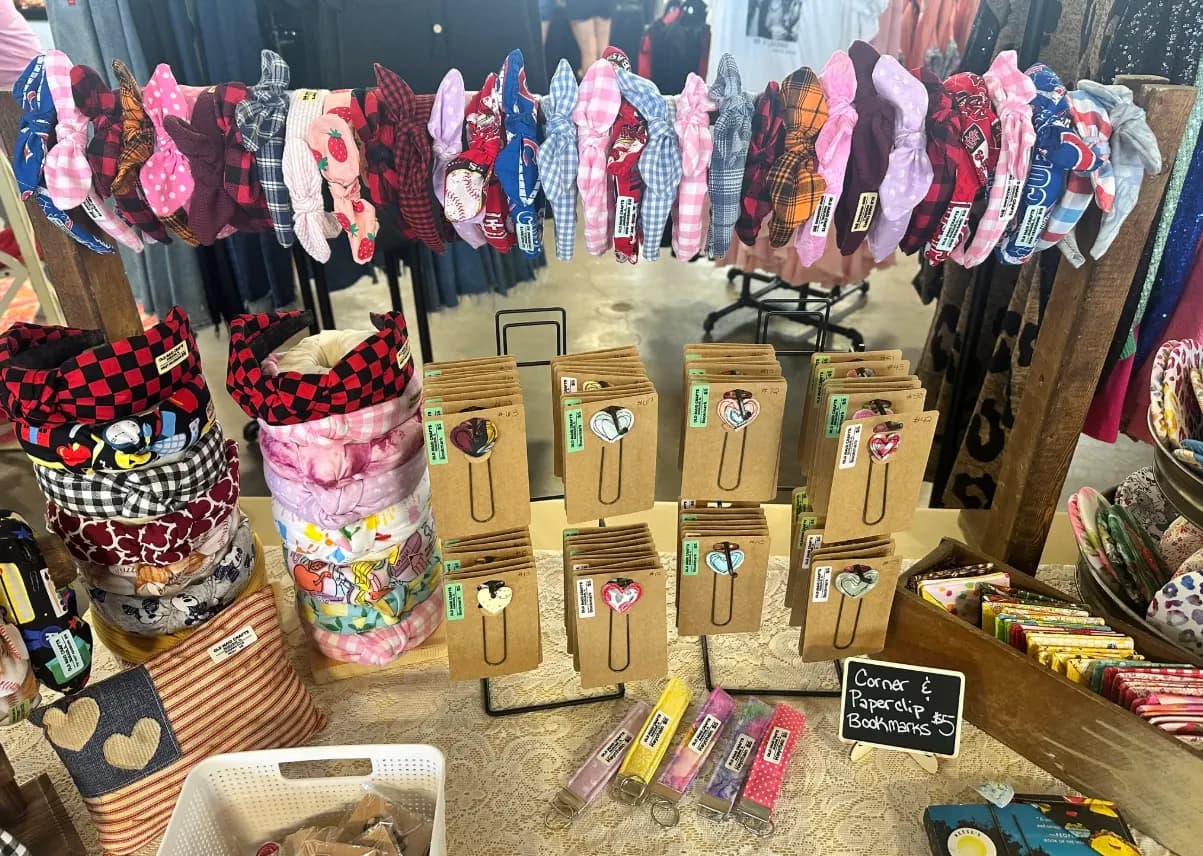
Hair bows and bookmarks 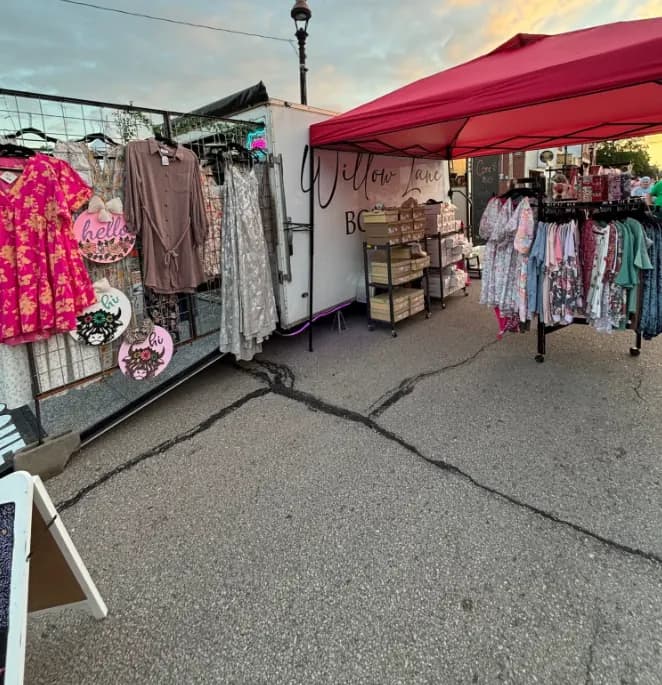
A clothing booth 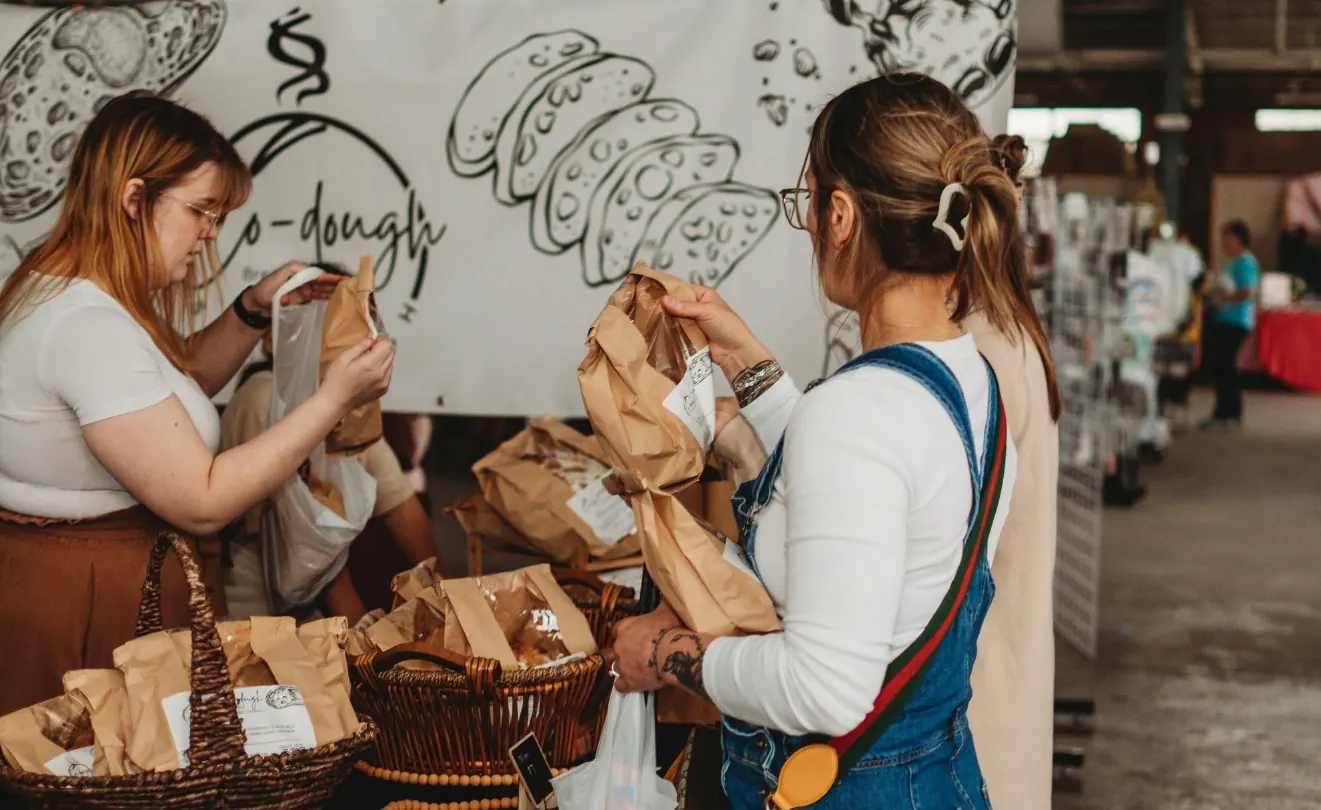
A baker bagging an order 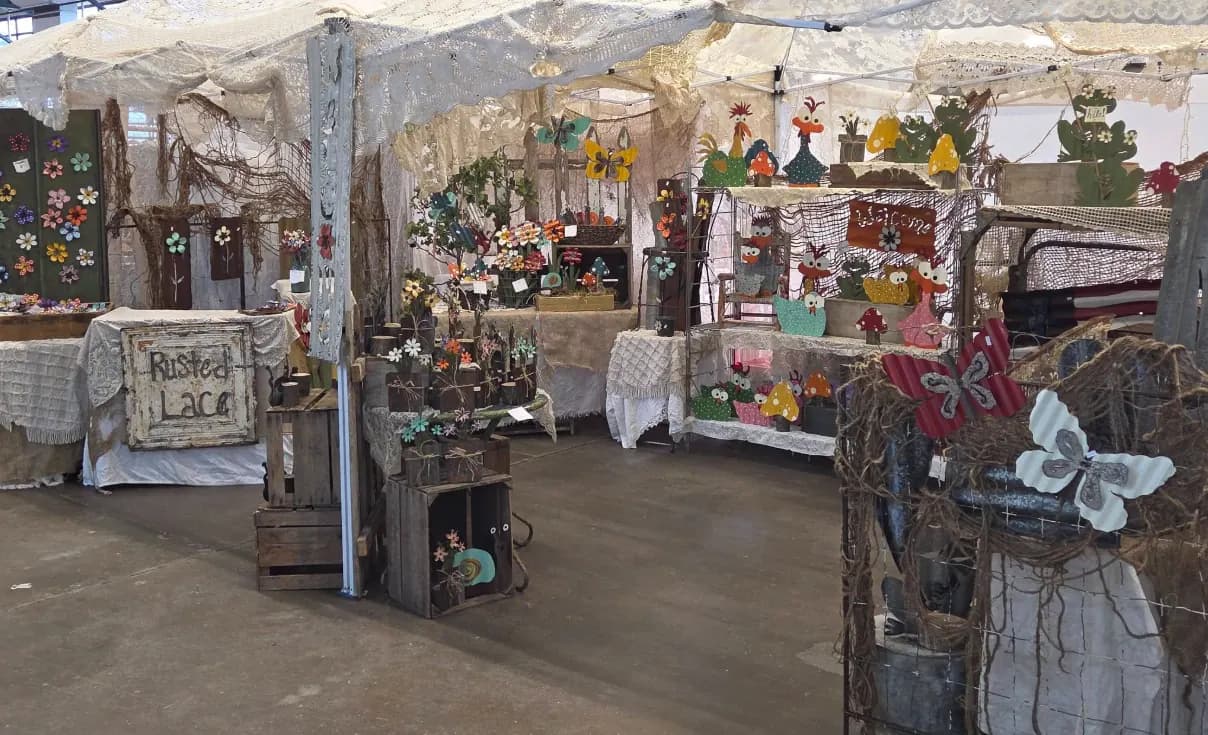
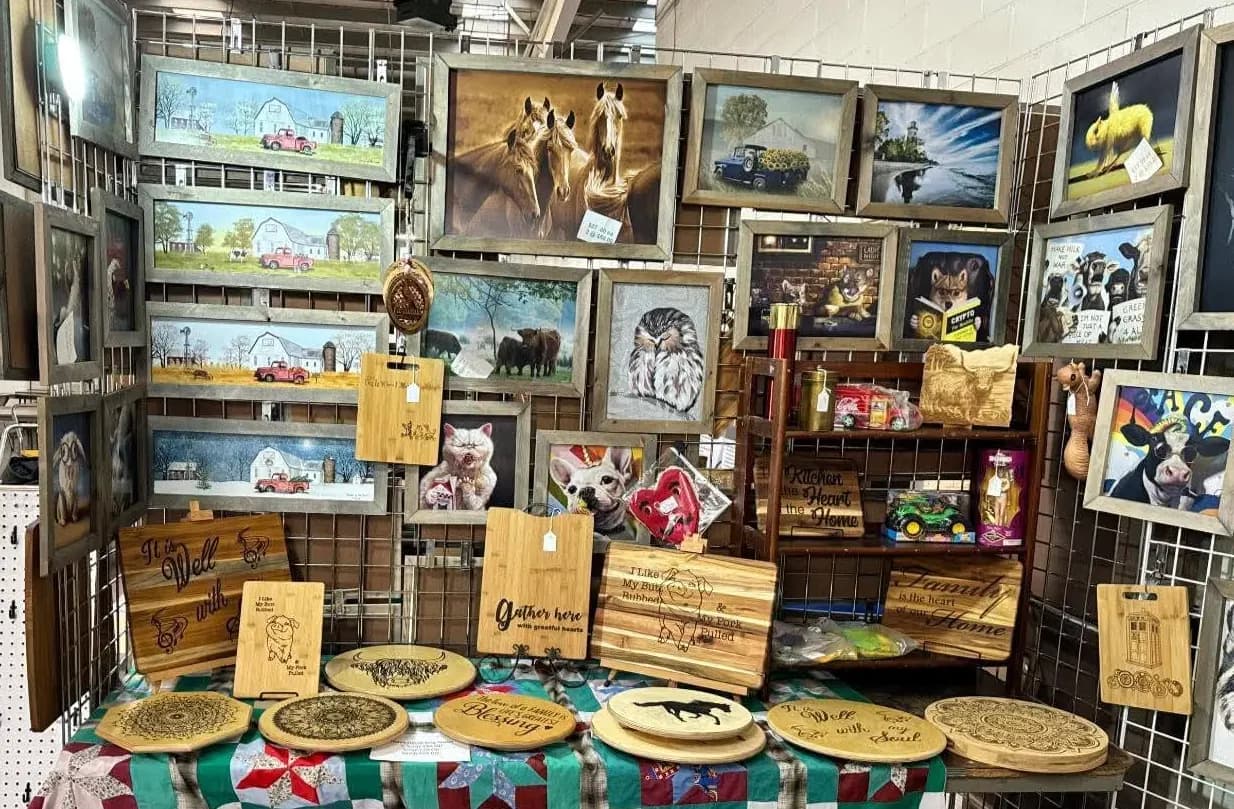
A booth of rustic decor 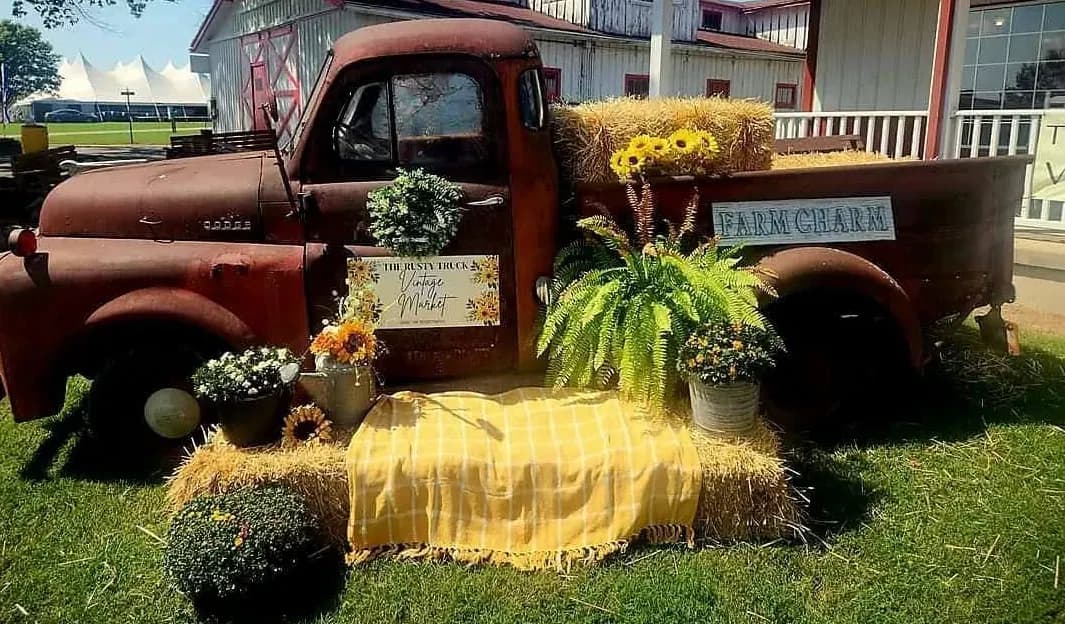
A vintage truck as the display 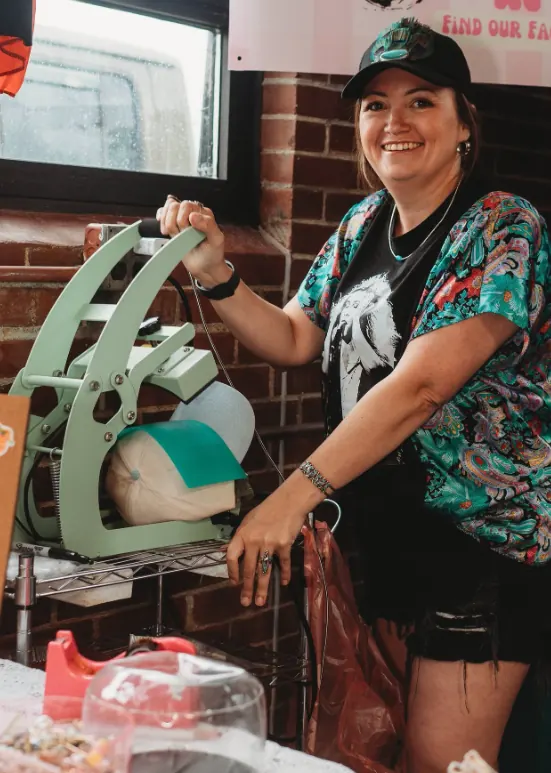
A vendor at work in her booth

Ready to host your show?
My Vendor Show takes your vendor applications, collects booth fees by card, and lays out your booth map, with every email to vendors written for you.
Free for hosts. Vendors who pay online pay a small booking fee: 3%, never more than $5 a booth, unless you choose to cover it. Square takes its usual card fee.
Sign up free