Where to put each vendor
Place vendors in order: power and food first, then your strongest booths, similar vendors apart, and fair rules for corners, requests and no-shows.
Last checked October 27, 2026
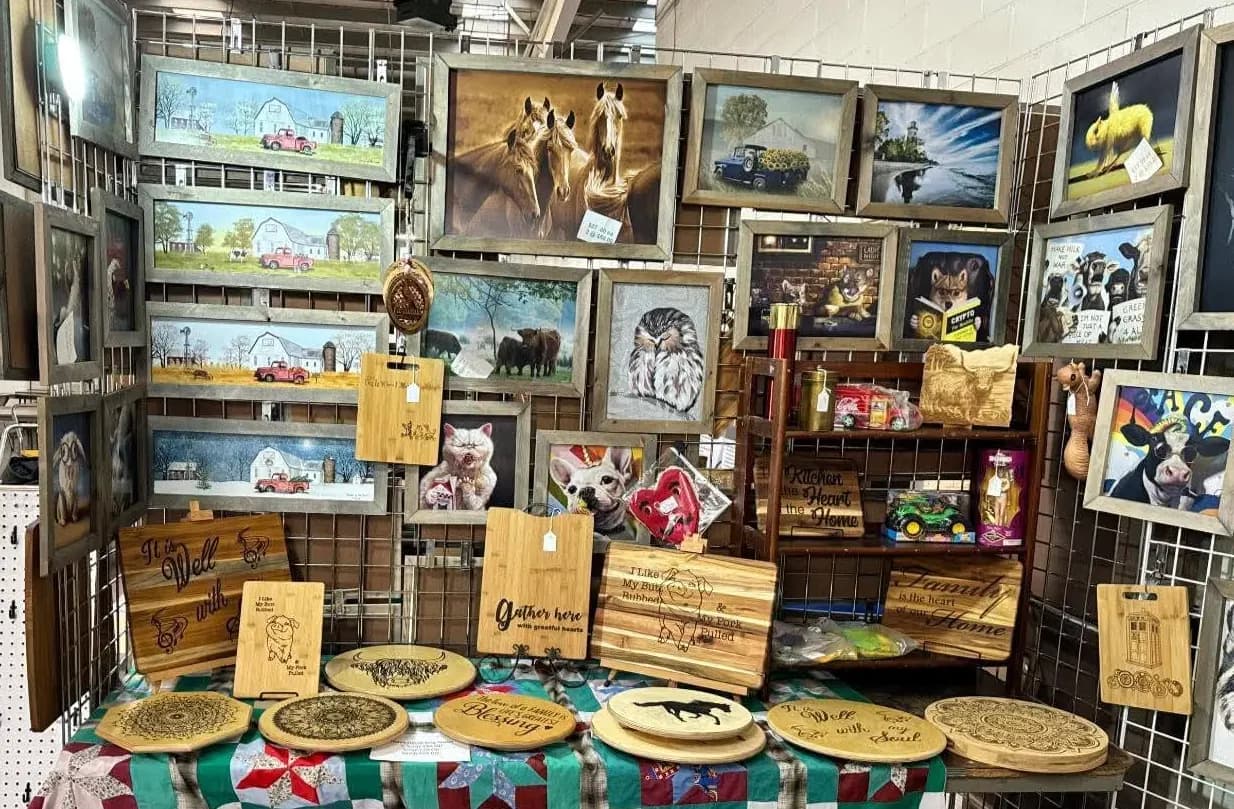
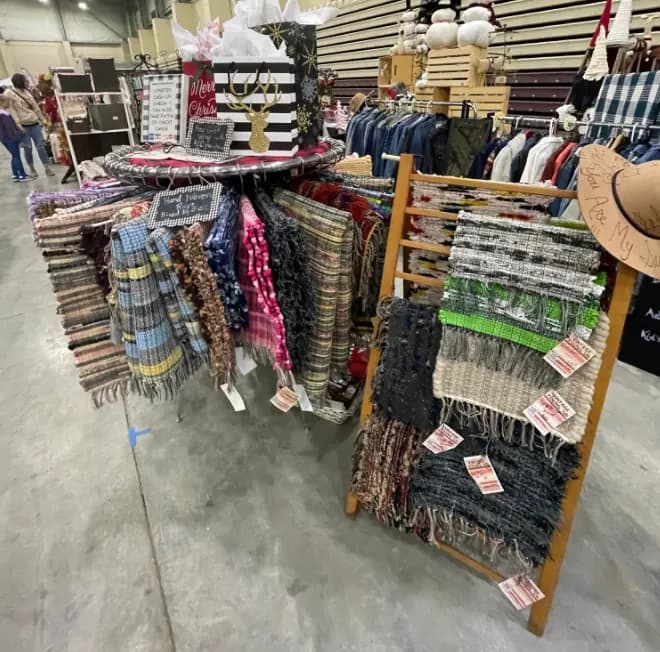
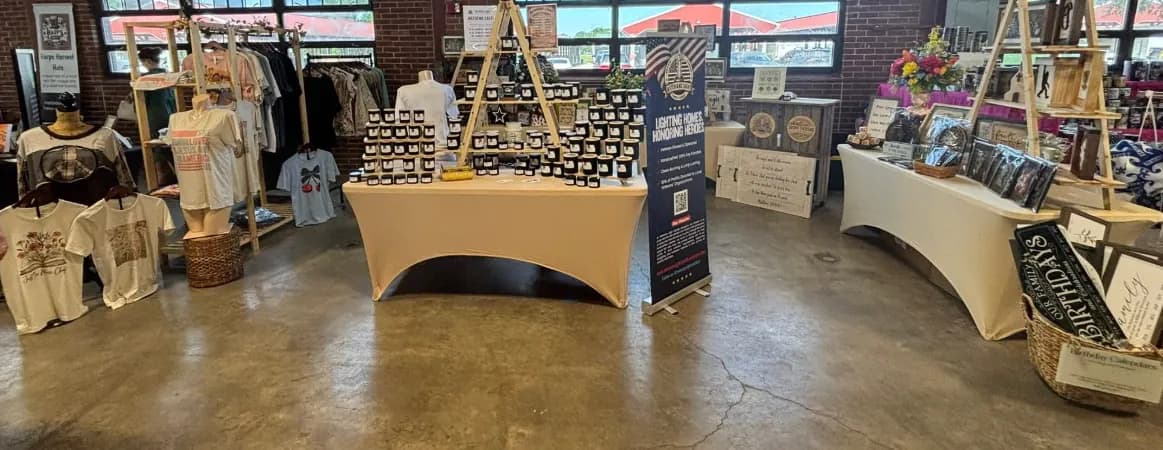
This guide is for placing vendors in booths once you've accepted them: who goes where, and how to keep it fair. Most of it comes from the rules shows publish for their own vendors, quoted below; where something comes only from experience, it says common practice. It follows How to lay out a booth map.
In short: place vendors in order, starting with the ones only a few booths fit; keep similar vendors as far apart as you can; tell everyone their booth once, 2 to 5 weeks ahead; and have a plan for no-shows.
1. Place vendors in order
Start with the vendors only a few booths can take, and finish with the ones who could go anywhere (common practice):
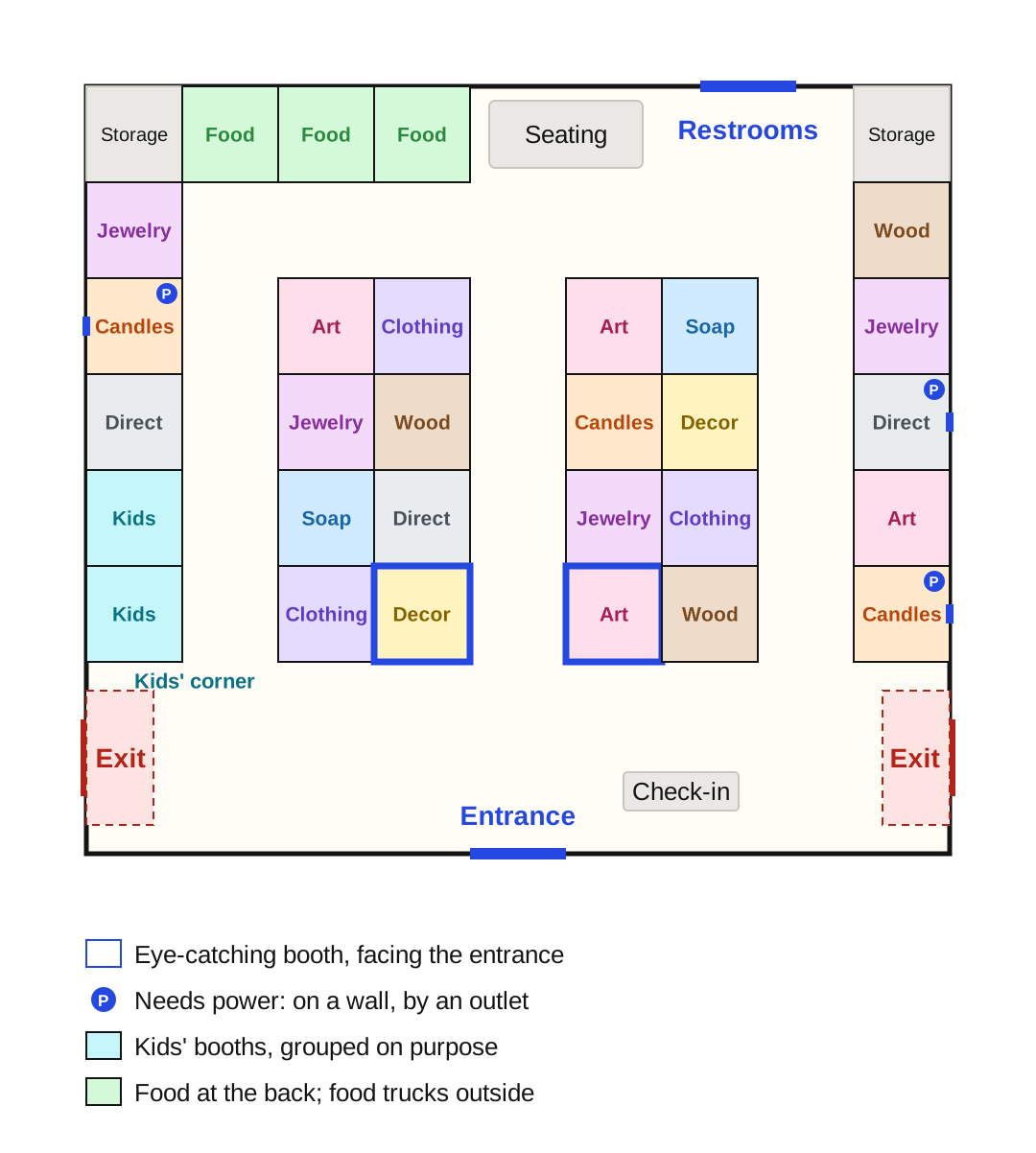
- Vendors who need power, because the outlets decide where they can go (step 6).
- Food, in its own area (step 5).
- Your strongest booths: the eye-catching and the popular, at the entrance, the ends and the middle (step 2).
- Returning vendors, near last year's spot where you can (step 7).
- Everyone else, keeping similar vendors apart (step 3).
To place this way, your application has to ask for it: power and what they'll plug in, wall space, booth size, any accessibility need, and requests (Vendor applications and choosing vendors has the full list). Alcoa, Tennessee, asks for "an itemized list of all equipment to be used (with wattage and amp requirements for each)."
2. Put your strongest booths where shoppers start
- Popular vendors at both ends and in the middle. Montana's farmers market guide calls them anchor vendors: "popular with customers, have a consistent product, are savvy at booth display," and placed "at either end of the market as well as in the middle to help encourage a steady flow of traffic."
- Eye-catching booths by the entrance. A big, beautiful booth is the first thing shoppers see, and it pulls them in (common practice). The Made in Montana Trade Show gives its Best in Show winner first choice of booth the next year.
- Draws at the far ends. Talbot Street Art Fair in Indianapolis puts food at both ends: "Having food options and activities at both ends of the fair encourages attendees to walk the entire event," its organizer writes.
3. Keep similar vendors apart
Two of the same kind side by side split the same shoppers, and vendors notice. Shows say so in their own rules:
- "Vendor sites are selected to avoid similar items being next to each other whenever possible" (the Art Center, Grand Junction, Colorado).
- "We tried to carefully place vendors to avoid having similar product categories directly next to each other" (Shepherd Maple Syrup Festival, Michigan).
- The Marion County Fair in Oregon places vendors "being mindful to separate vendors with similar products," and says plainly it "cannot guarantee that there will not be a small amount of product duplicity."
How far apart? No show gives a distance. The firm rule everywhere is "not next to"; Talbot Street also tries "not to have two competing artists across the street from each other." Our recommendation: as far apart as the room allows. Not side by side, not back to back, and not facing across an aisle.
- Mix kinds of vendors through the whole show, not in clusters. "Product mix throughout market" is on the New York farmers market federation's checklist, and Hagley's craft fair in Delaware keeps "a good mix of media throughout."
- Pair vendors that sell well together, like a baker beside a honey or jam maker (Montana's guide).
- Direct sales (companies like Scentsy or Pampered Chef): most shows allow one seller per company (Harrison, Michigan; Beaverdale, Iowa), some allow two (Clayton, North Carolina), and some companies allow only one of their sellers at an event. Spread them out like any other similar vendors (common practice).
- Mark each vendor's kind before you start. Talbot Street codes every artist's medium in a spreadsheet "so it is easy to make sure we do not place two artists of the same mediums together."
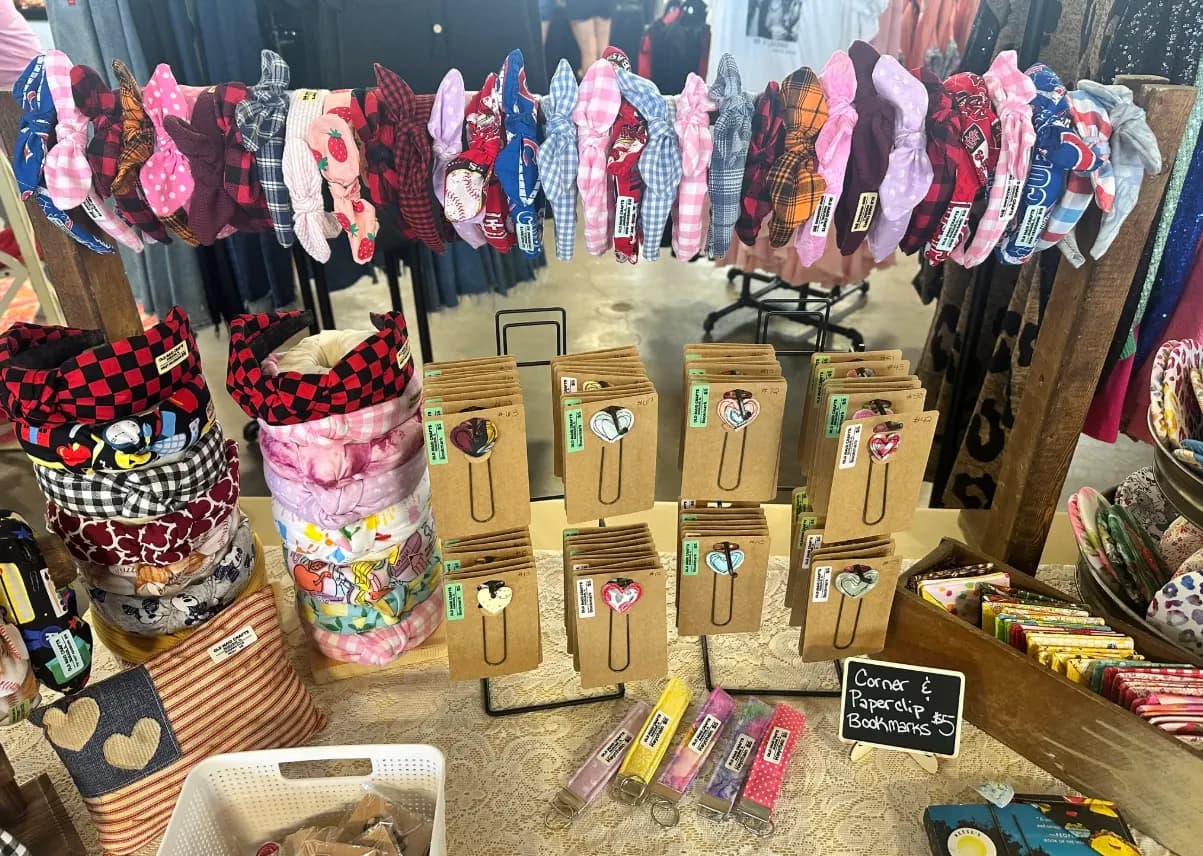
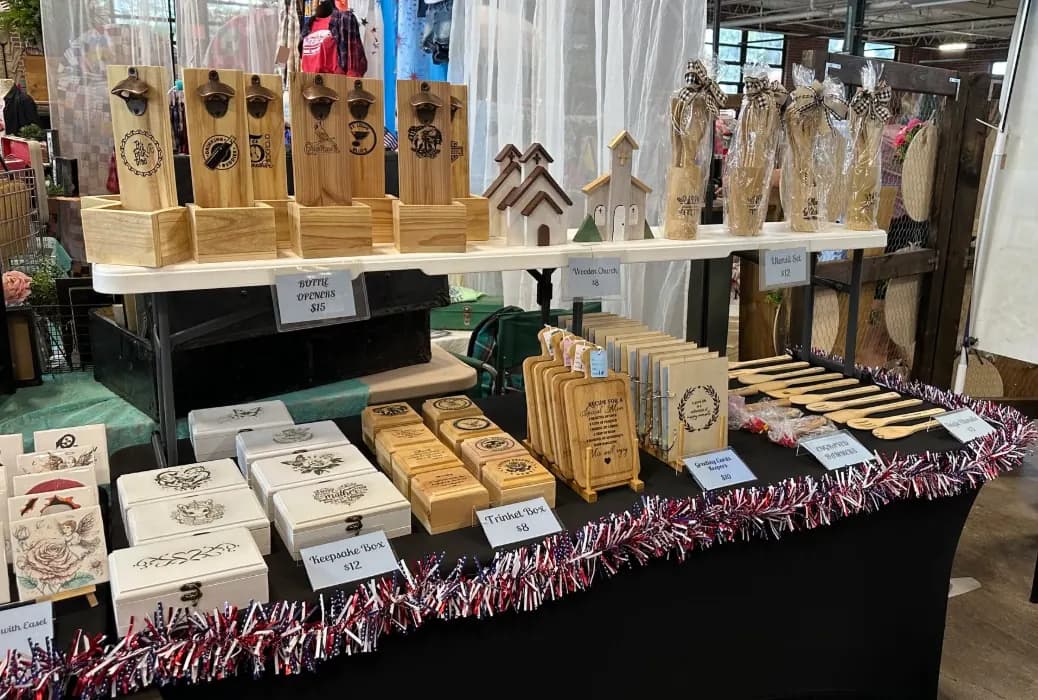
From real vendor shows
4. Group a few things on purpose
- A kids' corner: the vendors who sell children's things, like clothes, toys and books, together in one corner, where families can find them all at once (common practice).
- Nonprofits and your information table can share a spot of their own. Iowa's farmers market handbook puts "the information booth, non-profit space, and vendors with easy-to-move product" together beside the main market.
5. Put food in one area
- Food trucks together, usually outside, in their own area. Plymouth puts food "in a designated food court area — separate from the art booths to help manage food traffic and lines," and Rolesville, North Carolina, puts its food trucks in a park's parking lot.
- Fire codes keep cooking apart from other booths: 10 feet between cooking and non-cooking booths (the California State Fire Marshal), 20 feet between cooking tents and other tents (Brookhaven, Georgia), and 10 feet between food trucks (Cornell University; Portage, Michigan).
- Serving windows face the walking area, away from traffic (Portage), and lines stay out of fire lanes and exits (Brookhaven).
- Trash, hand-washing and restrooms near food. Orange County, California, wants trash cans "adjacent to food booths" and a toilet for every 15 food workers within 200 feet.
- Seating near food, with room for wheelchairs at some tables (the ADA National Network).
- Scented booths, like candles and soap, away from food where you can, so neither covers the other (common practice).
6. Plan who gets power
- Ask on the application, with a deadline. Outlets are limited, so many shows give them out first come, first served (Williamson County, Tennessee; Hendricks County, Indiana), for a fee per hookup: $25 in Orangevale, California, $75 in Williamson County.
- Place powered vendors by the outlets, often on the walls. Marmion Academy's craft show in Illinois has electricity "only available along the perimeter of the rooms," and returning crafters who used power in the middle of a room may be moved.
- Set a limit, like one 20-amp outlet per booth (Beecher, Illinois), and keep the right to unplug a vendor who draws too much (Beecher; Williamson County). Spread heaters and coffee makers across circuits: one 20-amp circuit carries about 1,920 watts (How to lay out a booth map, step 6).
7. Corners, requests and returning vendors
Corners: shows give them out first come, first served (Harrisonburg, Virginia; Talbot Street), by jury score (Art & Apples), or for an extra charge: $175 against $150 at Marmion, $500 against $400 at Grand Haven, Michigan's market. For a small show, first come, first served is the simplest. A corner suits a vendor whose display needs two open sides or hangs high on the walls (common practice).
Requests: say up front that you'll try, with no promises. Shows word it this way:
- "Location requests will be considered but are not guaranteed" (Oil Heritage Festival, Pennsylvania).
- Applicants can ask for a space, and "the coordinators will do their best to accommodate. There are no guarantees" (City of Fairfax, Virginia).
- Grand Junction adds that writing the same booth in all three choices doesn't raise your chances.
You have the last word, and vendors don't swap on their own. "Booth swaps are not allowed" (Hayward, Wisconsin). Marion County gives its fair management "full authority on the decision to move a vendor." Talbot Street places partners who sell separately side by side when they ask.
Returning vendors: their customers look for them in the same spot, so many shows keep them there when they can. "Many of our vendors who have attended for several years tell us they have a customer base that looks for their specific location," says Art & Apples' organizer. Marmion makes "every effort to keep returning crafters in the same booth or as close to their previous location as possible," without guaranteeing it.
8. Vendors with disabilities
- The ADA can cover your vendors, not only shoppers. Privately run shows fall under Title III and city-run ones under Title II, and both require reasonable changes to how you do things for people with disabilities (28 CFR 36.302; the Department of Justice's Title II primer). Placing a vendor near the accessible entrance, restrooms or parking when they ask is the kind of change those rules describe.
- Ask on the application, with a deadline. Gaithersburg, Maryland, asks vendors to describe any accommodation they need and promises: "Your request for accommodations will in no way affect your acceptance status."
- Every booth on an accessible route, at least 36 inches wide (How to lay out a booth map, step 4).
9. Keep the noise down
- No amplified sound from vendor booths (Williamson County's festivals).
- Music is yours to control: low enough that vendors can talk with customers, with speakers facing away from booths (Portland Farmers Market), and turned down when vendors ask (Bloomington, Minnesota). Cities limit stage sound, like 85 decibels at 20 feet in Northglenn, Colorado.
- Put music, demonstrations and other loud setups at an end or by the food, not among quiet booths (common practice).
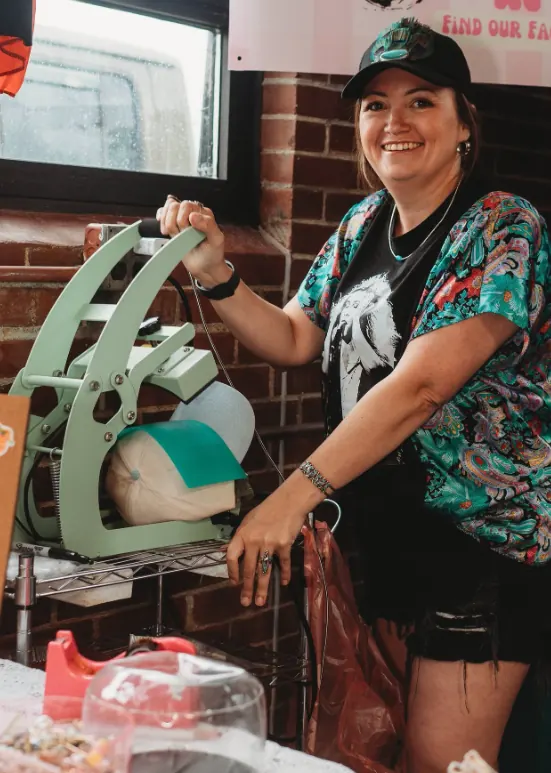
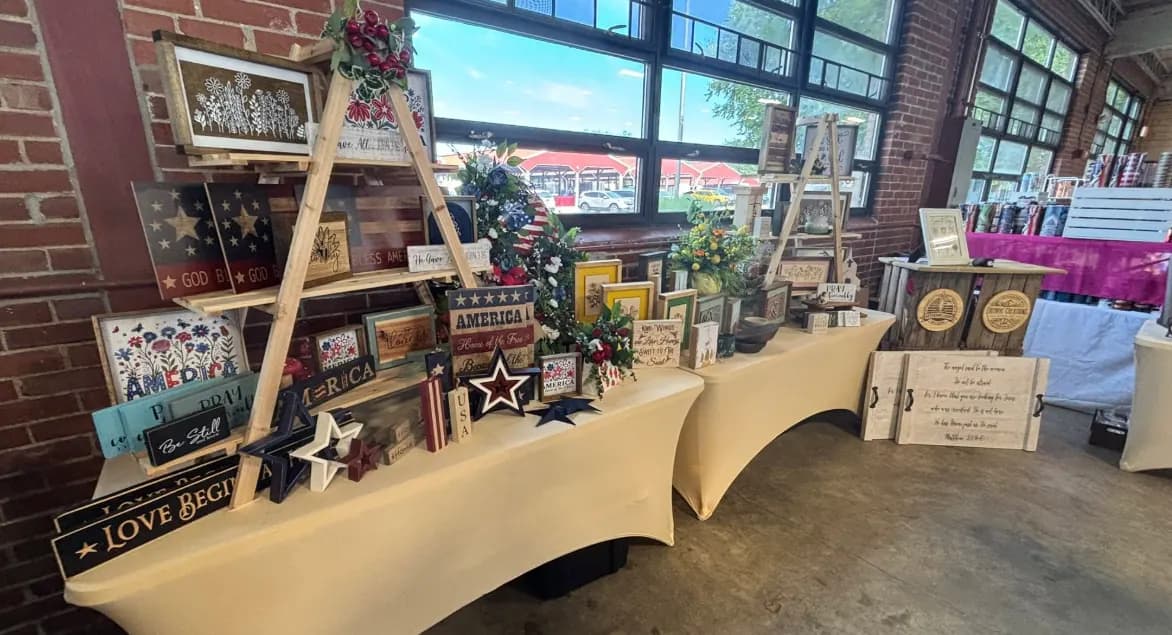
From real vendor shows
10. Tell vendors their booth once
- When: most shows send booth assignments 2 to 5 weeks before the show. Oil Heritage and Clayton send them two weeks ahead. Cameron Park, California, sends them by November 2 for a November 21 show.
- What: the booth number and the map, with the vendor list sorted by business name so everyone can find each other (Hayward).
- Then don't move people. Mistakes happen rarely, and vendors are usually understanding when one does, but a move after booths are out costs you trust (common practice). Say in your rules that you may have to adjust, and that you'll tell the vendor directly if you do (Shepherd Maple Syrup Festival).
On My Vendor Show: the map's Vendors mode lists your approved vendors with their kind (each a color on the map), whether they need power, want a corner or applied for a size, and any request they wrote. It warns when the same kind is next door, when a vendor who needs power is in a booth without it, when a corner request isn't on a corner, and when a vendor is in a different size than they applied for. Then it emails each vendor their booth and map; vendors see only their own booth.
Sign up free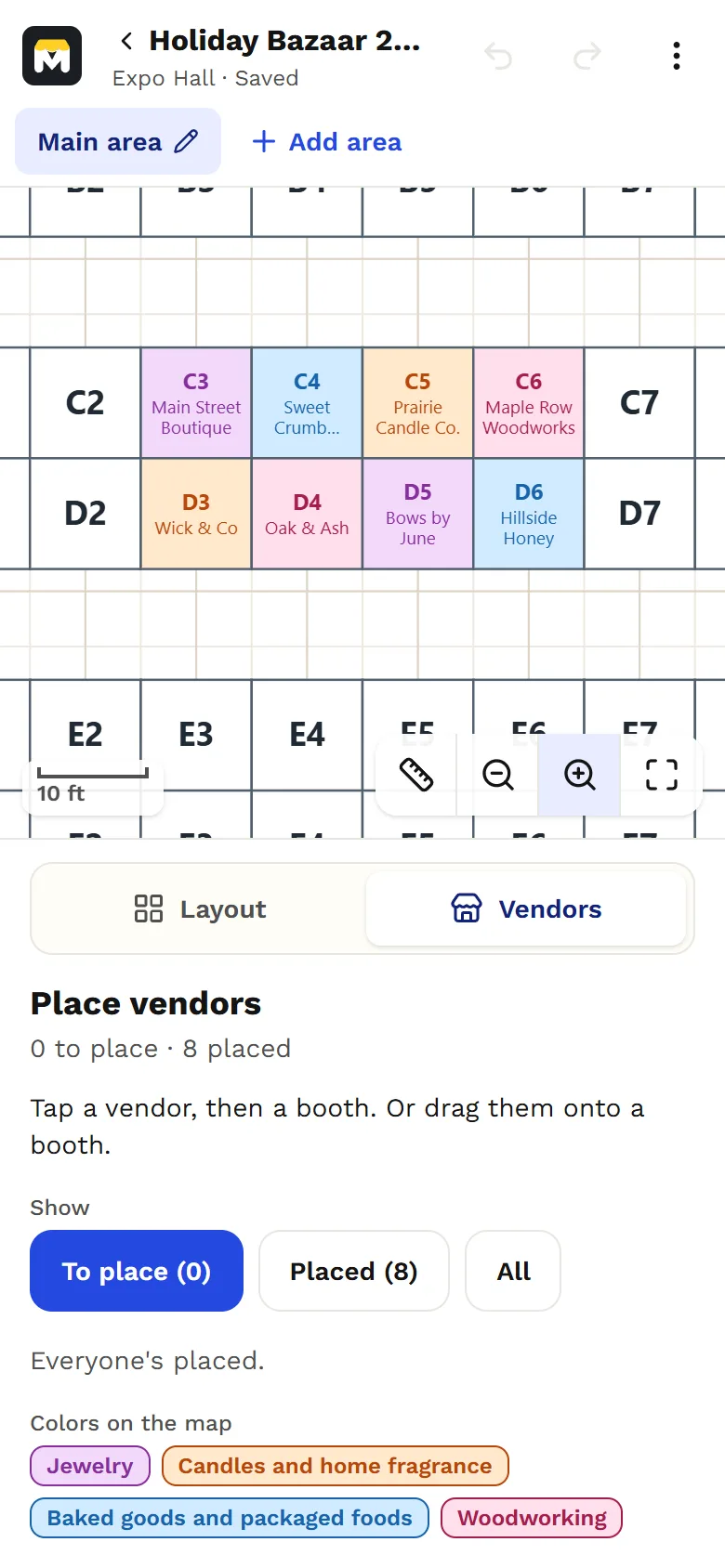
11. Plan for no-shows
- Set a check-in deadline, 30 minutes to 2 hours before doors open, after which the booth goes to someone else and the fee stays with you. The St. Henry District High School craft show in Kentucky opens at 9 and gives away booths not checked in by 7; Fairfax wants crafters there an hour before, with "NO REFUNDS."
- Fill it from your waitlist, best with a local vendor who can come quickly (common practice). Grand Haven calls daily vendors in order, starting with whoever sells what the show is missing. The University of Washington's Makers Fair lets stand-by vendors wait on site and use an empty table for free.
- No one to fill it? Let the neighbors spread out. Fletcher, North Carolina's market lets "the vendor to either side of the designated space" take it. Many hosts give the two neighbors the extra space at no charge (common practice).
- Put it in your rules: the check-in time, and that a no-show loses their fee. Vendor rules, refunds and bad weather has how other shows word it.
- Don't leave a gap. "I like to make sure that there are no blank spaces or empty stalls in my market's layout," says one market manager in Iowa's handbook. Gaps make a show look half full and give shoppers a shortcut past booths.
Placement mistakes to avoid
- Two of a kind side by side, back to back or facing across an aisle.
- A vendor who needs power in a booth without an outlet.
- Food lines across an aisle or a fire lane.
- Loud music next to quiet booths.
- Moving vendors after you've told them their booth.
- Promising requests you can't keep.
- Favorites: the best spots for friends, with no reason other vendors can see (common practice).
- An empty booth left as a gap.
Free printable: placement checklist
Place vendors in order, then check the map before booths go out. We'll email you the link, to print or save as a PDF.
Where these numbers come from
Numbers marked as common practice come from many shows' published rules and prices, not from one source. The rest come from these pages:
- Montana farmers market guide: vendor stall assignments and anchor vendors
- Farmers Market Federation of New York: manager training manual (market layout checklist)
- Sunshine Artist: Talbot Street Art Fair's layout, by its organizer (Nov 2023)
- Sunshine Artist: Plymouth Art in the Park's layout, by its organizer (Mar 2026)
- Sunshine Artist: Art & Apples Festival's footprint, by its organizer (Feb 2026)
- The Art Center, Grand Junction, Colorado: Holiday Art & Craft Fair application (2026)
- Shepherd Maple Syrup Festival, Michigan: craft show vendors
- Marion County Fair, Oregon: commercial vendor exclusives policy
- Cottonwood Creek Church: Christmas Market vendor contract (2024)
- Winter Park Sidewalk Art Festival, Florida: jury and space information
- Hagley Museum and Library, Delaware: craft fair application
- Made in Montana Trade Show (Montana Department of Commerce): exhibitor questions (2027)
- City of Harrison, Michigan: Street Fair rules (2026)
- Clayton Harvest Festival (Clayton Chamber of Commerce), North Carolina: vendors
- Beaverdale Holiday Boutique, Des Moines, Iowa: application information
- Oil Heritage Festival craft show (Venango Area Chamber), Pennsylvania: application (2024)
- City of Fairfax, Virginia: Holiday Market application (2026)
- Hayward Area Chamber of Commerce, Wisconsin: Fall Fest vendor packet (2025)
- Cameron Park Community Services District, California: Christmas Craft Faire (2026)
- Marmion Academy, Aurora, Illinois: Christmas Craft Show crafter information
- City of Harrisonburg, Virginia: Westover Holiday Craft Show application (2026)
- Chamber of Commerce Grand Haven, Michigan: farmers market rules (2025)
- Indian River Chamber of Commerce, Michigan: Holiday Craft Show (2026)
- St. Henry District High School Booster Club, Kentucky: craft show code of conduct
- University of Washington HUB: Makers Fair policies (stand-by vendors, 2026)
- Town of Fletcher, North Carolina: community farmers market rules (2025)
- Iowa Farmers Market Manager Handbook, chapter 3: market layout
- California State Fire Marshal: special events and fairs
- City of Brookhaven, Georgia: fire code for special event food service
- Cornell University: mobile vending and food truck requirements
- City of Portage, Michigan: mobile food vendor rules (2026)
- Town of Rolesville, North Carolina: Fall FunFest vendor packet (2024)
- Orange County Health Care Agency, California: community event organizer guidelines
- ADA National Network: making temporary events accessible
- Heritage Foundation of Williamson County, Tennessee: rules for festivals (2026)
- Village of Beecher, Illinois: 4th of July Festival Market (2024)
- City of Alcoa, Tennessee: FreedomFest food and craft vendor rules
- Orangevale Recreation & Park District, California: Holiday Craft Fair application (2024)
- Hendricks County Extension Homemakers, Indiana: Holiday Fest booth registration (2026)
- U.S. Department of Justice: ADA Title III regulations
- U.S. Department of Justice: ADA Title II primer for state and local governments
- City of Gaithersburg, Maryland: Book Festival vendor application (accommodations, 2024)
- City of Bloomington, Minnesota: farmers market live music
- Portland Farmers Market: music and entertainment agreement (2026)
- City of Northglenn, Colorado: special events packet (sound levels)
Last checked October 27, 2026. This isn't legal or tax advice; rules differ by state and city.
From real vendor shows
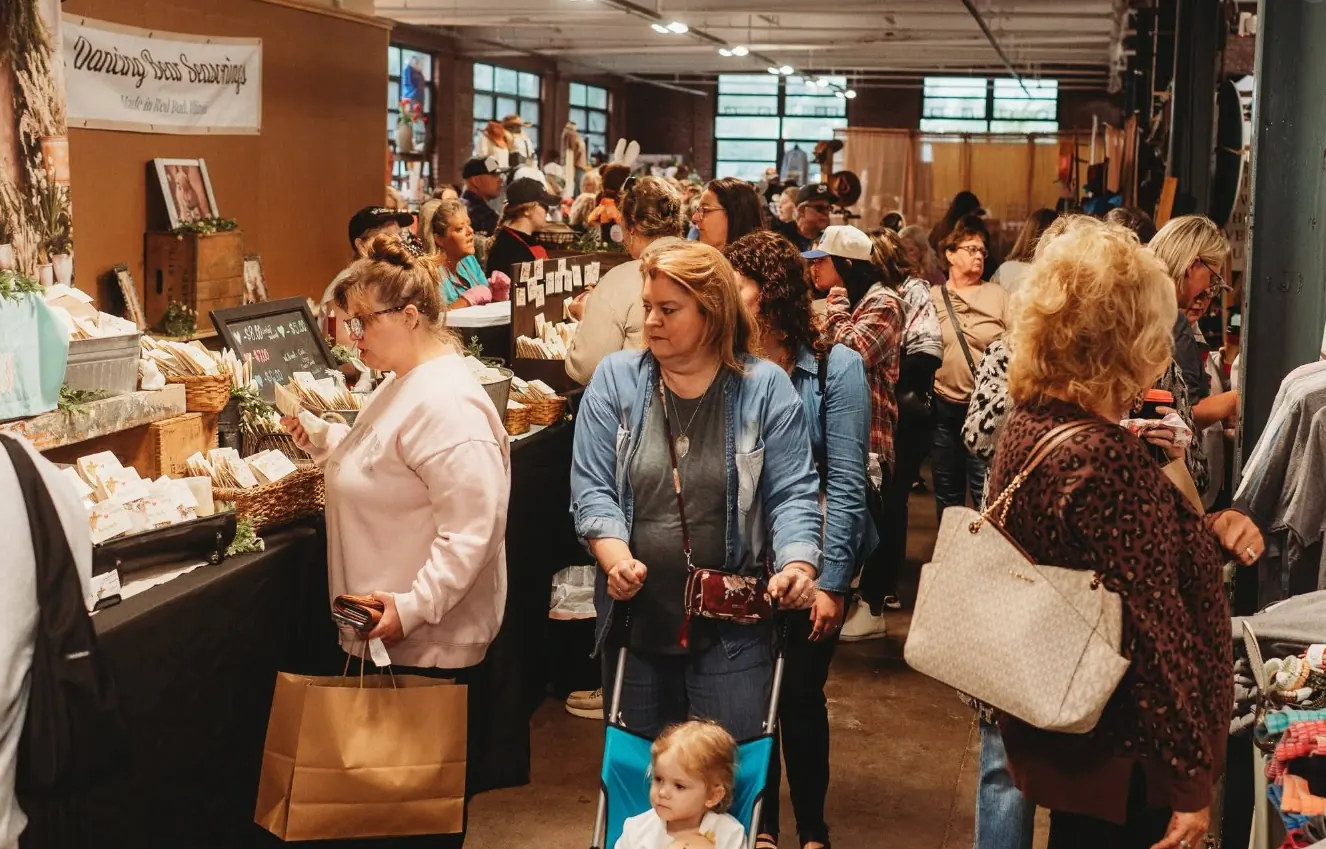
A full aisle on show day 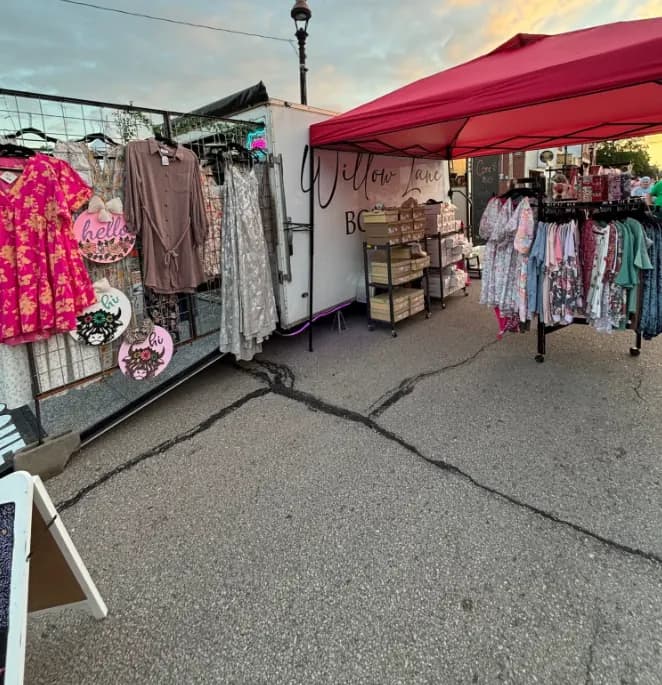
A clothing booth 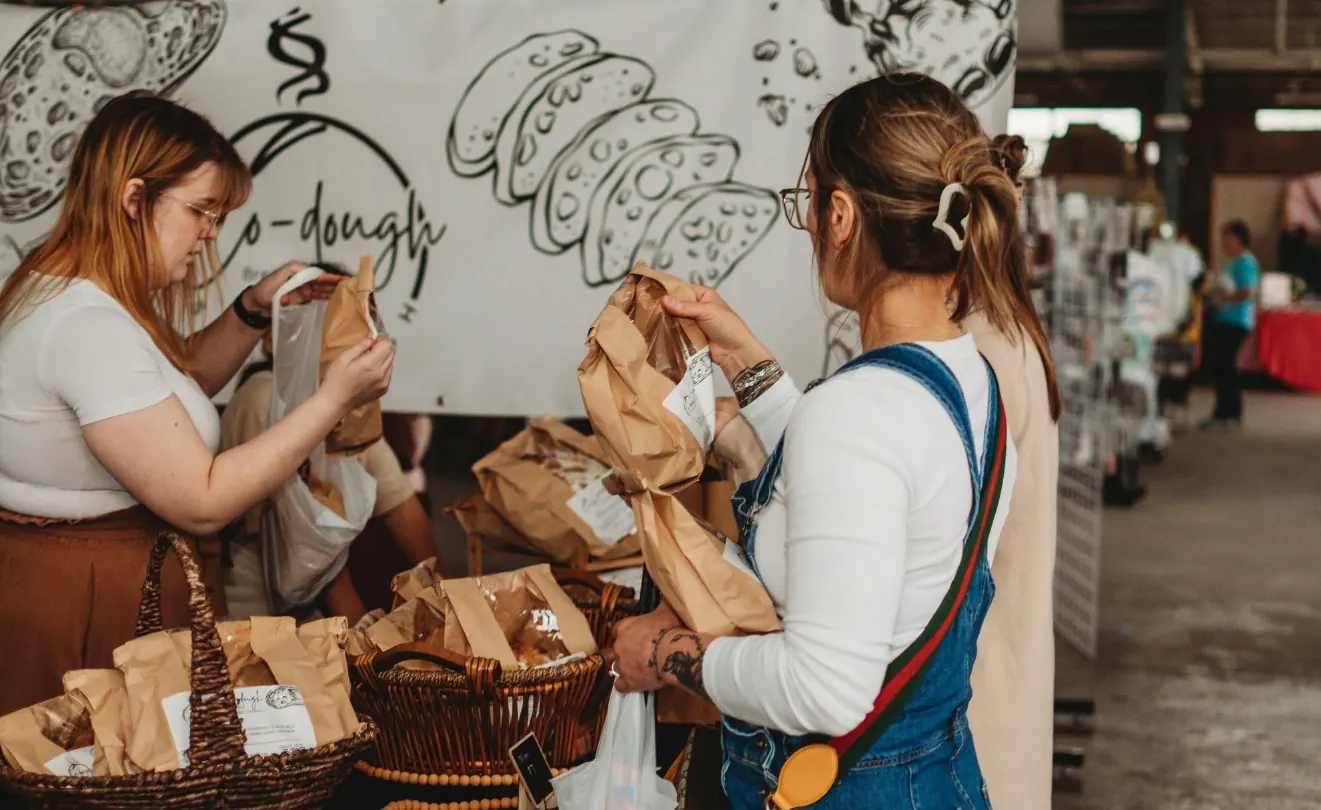
A baker bagging an order 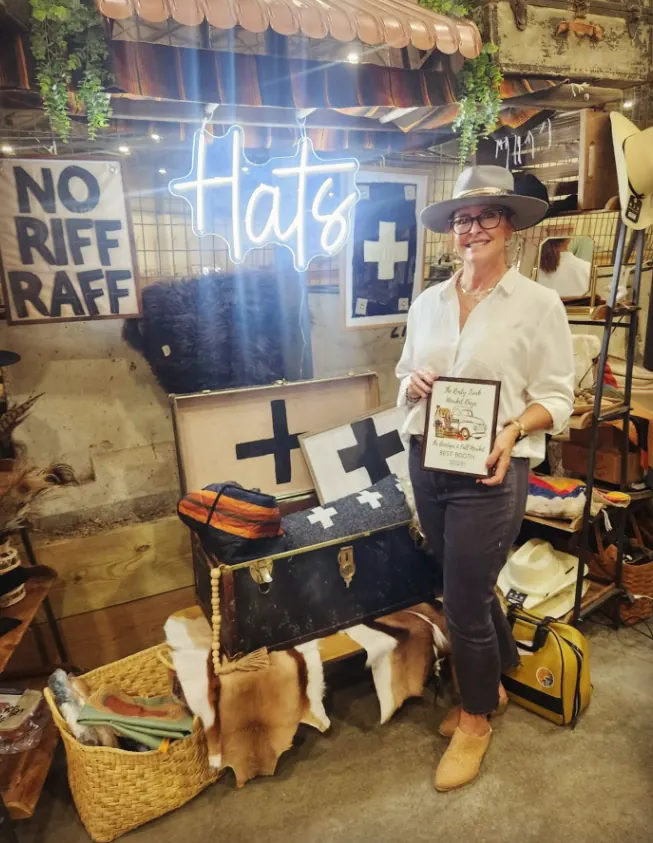
A vendor showing a framed print 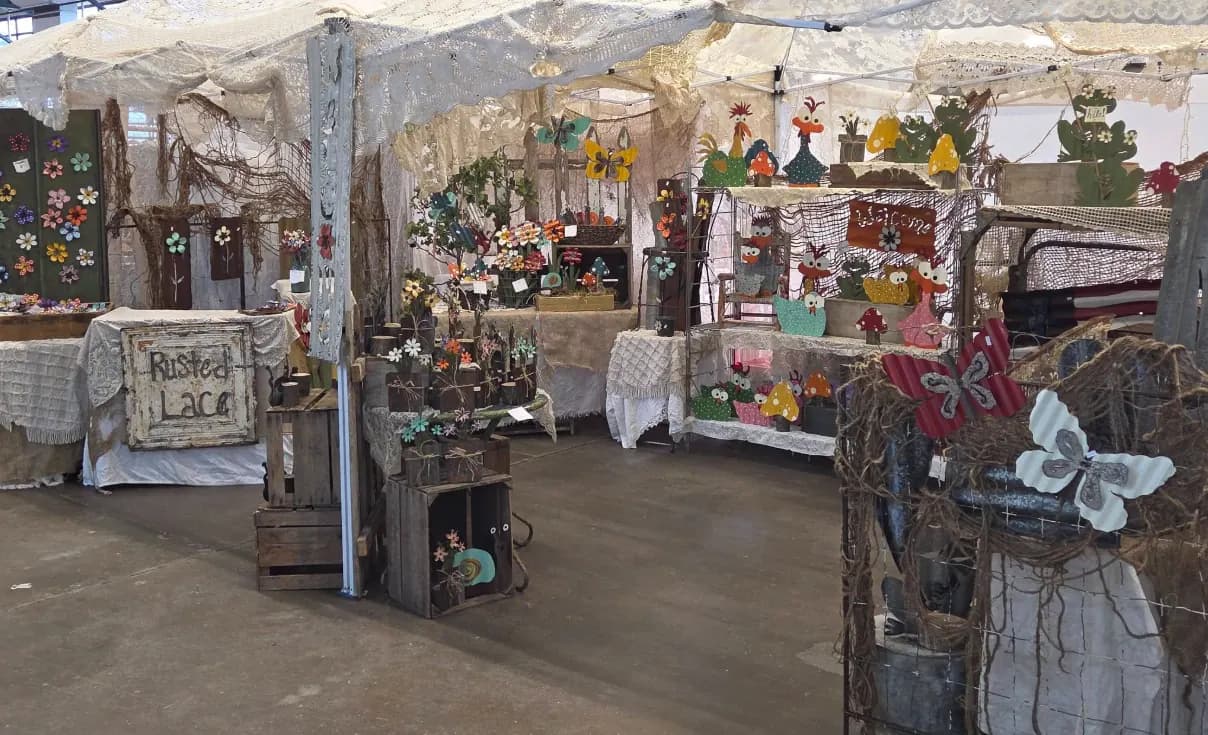
A booth of rustic decor 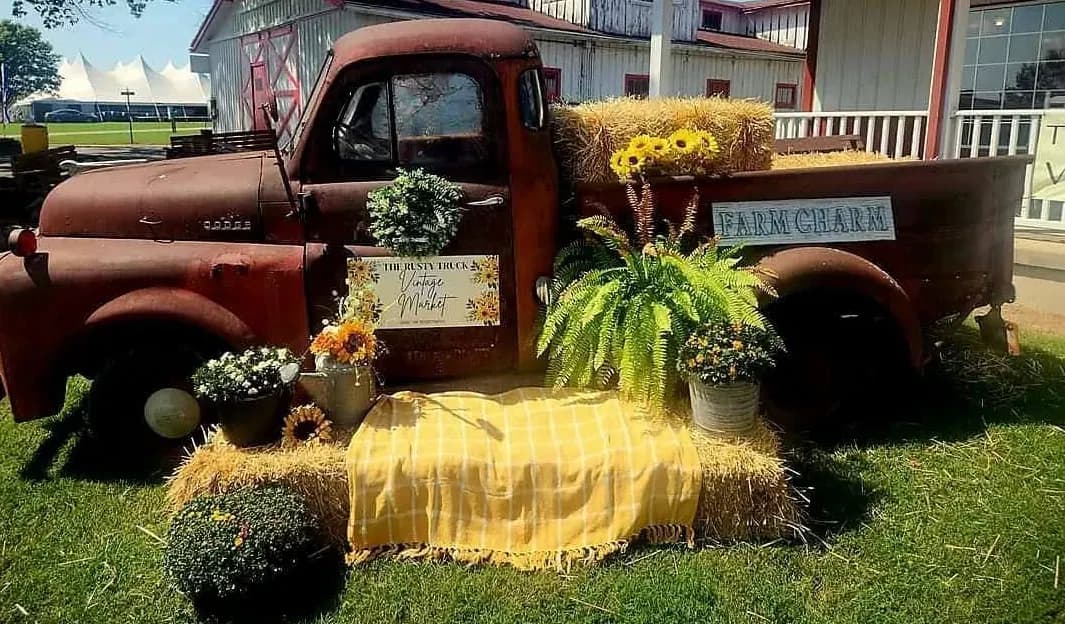
A vintage truck as the display

Ready to host your show?
My Vendor Show takes your vendor applications, collects booth fees by card, and lays out your booth map, with every email to vendors written for you.
Free for hosts. Vendors who pay online pay a small booking fee: 3%, never more than $5 a booth, unless you choose to cover it. Square takes its usual card fee.
Sign up free